Why Multi-Vehicle Accidents Can Cause Complex Collision Damage
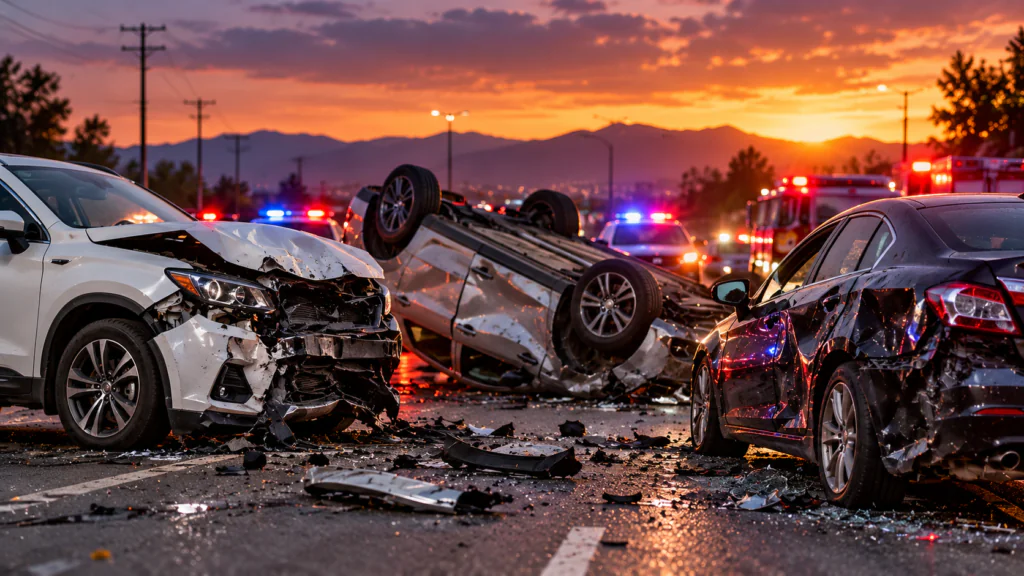
Fatal Three-Vehicle Crash in Palmdale Leaves 2 Dead, 3 Injured A violent three-vehicle collision in Palmdale on Sunday night left two people dead and three others injured, according to KTLA. The crash was reported at approximately 7:45 p.m. on October 4, 2026, on 30th Street West near West Avenue N-3 in northern Los Angeles County. California Highway Patrol officers arriving at the scene found three badly damaged vehicles, including one car that had overturned. Two people were pronounced dead at the scene. Three additional people were transported to local hospitals, according to a CHP spokesperson cited by KTLA. Authorities did not immediately release the identities of the victims. The intersection remained closed for several hours while authorities investigated and had reopened by approximately 1 a.m. Monday. At the time of KTLA’s report, the cause of the collision remained unknown. Authorities had also not determined whether impairment was a factor. Why Can Multi-Vehicle Accidents Cause More Complicated Vehicle Damage? Every collision is different. In a two-vehicle accident, there may be one primary impact between the vehicles. In a multi-vehicle collision, however, a vehicle can potentially experience more than one impact. For example, a vehicle could sustain damage to the rear and then be pushed into another vehicle. Another vehicle might be struck on more than one side. These are general examples of how multi-vehicle collisions can occur and are not descriptions of what happened in the Palmdale crash, whose cause and sequence of events had not been established in the reporting available. The important repair question after any serious accident is therefore not simply: “Where is the dent?” It is: “What parts of the vehicle were affected by the collision?” That distinction matters when determining the appropriate repair. Can a Vehicle Have Multiple Areas of Damage After One Accident? Yes. A multi-vehicle collision can potentially produce damage in more than one area of a vehicle. Depending on how the accident occurred, affected areas might include: Front or rear bumpers Fenders Quarter panels Doors Hood or trunk Lighting assemblies Glass Mounting points Suspension-related components Structural areas Paint and refinishing surfaces This doesn’t mean every multi-vehicle accident damages all of these components. It means the repair assessment should be based on the actual vehicle and actual collision damage, rather than assuming the most obvious exterior damage tells the entire story. What Should Be Inspected After a Major Collision? The first step in repairing a seriously damaged vehicle is determining the extent of the damage. That can involve examining the exterior and, when appropriate, accessing areas hidden behind damaged panels or components. A professional damage assessment may consider several questions: Where did the vehicle sustain an impact? Understanding the damaged areas helps establish the scope of the repair. Did the impact affect components behind the exterior panels? A damaged bumper cover, for example, does not necessarily show the condition of everything behind it. Are body panels still properly aligned? Changes in gaps or fit between panels can be signs that additional evaluation is needed. Were structural areas affected? More significant accidents can require evaluation of structural components as part of the repair planning process. Are additional components damaged? Lighting, glass, mounting areas and other components around an impact point may also require attention. The objective is to identify what needs repair before restoring the vehicle. What Does an Overturned Vehicle Tell Us About Collision Severity? KTLA reported that one of the three vehicles in the Palmdale crash had overturned. That fact demonstrates the seriousness of this particular accident, but it does not tell us exactly what caused the vehicle to overturn or what repair procedures would have been required. Those details were not established in the information available. More broadly, a vehicle involved in a severe accident requires a comprehensive assessment based on its actual condition. An overturned vehicle, for example, may have damage involving areas beyond the front or rear of the vehicle. The specific damage and whether a vehicle is repairable must be determined individually. What Is Structural Damage After a Car Accident? Structural damage involves areas that contribute to the vehicle’s underlying structure rather than simply exterior cosmetic surfaces. This is different from a scratch, paint chip, or superficial dent. Following a significant collision, determining whether structural areas have been affected can be an important part of the repair assessment. Depending on the vehicle and damage, repair procedures may involve structural repair or frame straightening. Hovee’s specializes in major accident and structural repairs as part of its collision repair services. What Are Signs That Collision Damage May Extend Beyond the Surface? Drivers should not attempt to diagnose structural damage themselves, but there are circumstances after an accident that justify professional evaluation. These can include: Significant visible body damage Changes in panel gaps Doors, hoods, trunks, or liftgates that no longer operate normally Loose or displaced bumper components Broken lights or mounting points Visible damage in more than one area Unusual noises after the collision Changes in steering or handling These signs don’t automatically establish structural damage. They indicate that the affected vehicle should be evaluated to determine what the collision actually damaged. How Is a Major Collision Repaired? There is no single repair procedure for every accident. The repair process depends on the vehicle and the extent and location of its damage. A significant collision repair may involve: Initial damage assessment — Identifying visible areas affected by the collision. Disassembly when required — Removing damaged components when necessary to evaluate affected areas. Repair planning — Determining which components can appropriately be repaired and which require replacement. Body and structural work — Repairing damaged body or structural areas as required. Replacement of damaged components — Installing appropriate replacement parts when necessary. Paint preparation and matching — Preparing repaired surfaces and matching the vehicle’s finish. Refinishing — Applying the required paint and finish. Reassembly — Reinstalling repaired or replacement components. Final inspection — Reviewing the completed work. Hovee’s provides auto body repair alongside its collision and structural repair services. Why Is Repair
Can Saltwater Damage Your Car? Laguna Beach High Surf Sends Seawater Into Parking Area
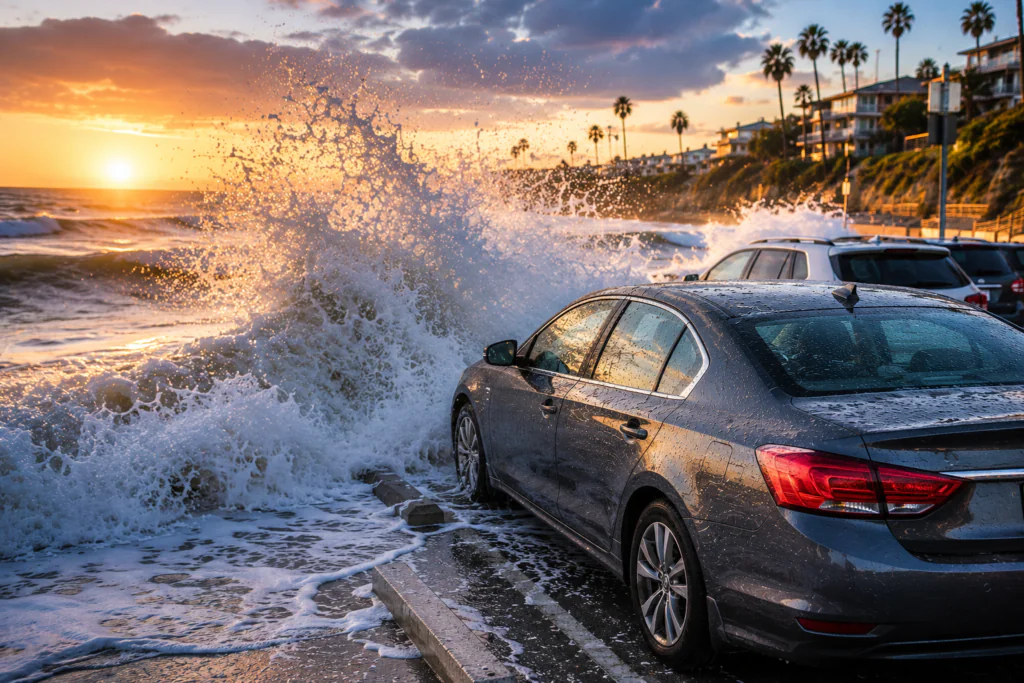
When ocean water starts reaching parked cars, a day at the beach can quickly turn into a vehicle-care concern. That happened along the Southern California coast in late August 2026, when elevated surf sent waves into a beachfront parking area in Laguna Beach. According to KTLA, video showed seawater surging into the parking area and surrounding vehicles as dangerous surf and rip currents affected portions of the coast. The scene raises an important question for Southern California drivers: Can saltwater damage your car? Yes. Saltwater exposure can contribute to corrosion and can leave salt deposits on a vehicle’s paint, body and other exposed surfaces. But the amount of exposure matters. Ocean spray on the exterior of a car is very different from seawater rising high enough to flood parts of the vehicle. Understanding that difference can help you determine what to do next. A vehicle exposed only to ocean spray should not automatically be treated as flood damaged. A vehicle that has been partially submerged or had seawater enter its interior requires a much more cautious response and may need evaluation beyond an auto body shop. What Happened Along the Southern California Coast? KTLA reported on August 30, 2026, that a cooling trend was bringing some relief after weeks of hot weather across Southern California. But the changing weather came with another concern. A beach hazards statement was in effect through Monday afternoon for Ventura County beaches, the Malibu coast and Los Angeles County beaches, according to the National Weather Service information cited by KTLA. Dangerous rip currents and breaking waves were possible as southerly swells moved through the region, with isolated waves reaching up to six feet. KTLA also reported from Topanga State Beach, while video from Laguna Beach showed particularly relevant conditions for vehicle owners: waves crashing over the shoreline and surging into a beachfront parking area, surrounding vehicles with seawater. The report did not provide an assessment of those vehicles or state that any particular vehicle sustained corrosion, paint, electrical or mechanical damage. That distinction is important. The Laguna Beach footage provides a useful example of potential vehicle exposure to ocean water, but it does not tell us what repairs—if any—the vehicles shown ultimately required. How Can Saltwater Damage Your Car’s Paint and Body? Cars in Southern California’s coastal communities are regularly exposed to salty air, but direct contact with seawater creates a more concentrated exposure. Salt left on a vehicle can retain moisture. When that combination remains on susceptible metal surfaces, it can contribute to corrosion over time. For the exterior of a vehicle, areas of concern can include: Painted body panels Existing paint chips or scratches Exposed metal Wheels and wheel areas Exterior trim and hardware Lower body panels Underbody areas reached by seawater The condition of the vehicle before the exposure also matters. For example, intact automotive paint provides a protective finish over the body surface. If an area already has chipped paint, a deep scratch or exposed metal, the underlying material may be more vulnerable to moisture and salt. That’s one reason visible damage to the finish shouldn’t simply be ignored after significant saltwater exposure. If you’re concerned about saltwater damage to car paint, an inspection can help determine whether you’re dealing with surface contamination, existing paint damage or an area that actually requires refinishing or repair. Does saltwater immediately ruin automotive paint? Not necessarily. A brief exposure to ocean spray is not the same thing as leaving a vehicle partially submerged in seawater. Drivers shouldn’t assume that every splash of ocean water means their car needs body or paint repair. The important factors include how much saltwater contacted the vehicle, where it reached, how long residue remained and whether the affected surfaces were already damaged. The goal is to address salt contamination appropriately rather than automatically assuming the worst. Is Ocean Spray Different From Saltwater Flooding a Car? Yes—and this is probably the most important distinction in this article. Consider three very different situations: Type of exposure What it means Ocean mist or spray Salt residue may collect on exterior surfaces and should be removed appropriately. Waves or seawater around the lower vehicle More areas of the body, wheels and underside may have been exposed and could warrant closer attention. Seawater enters or substantially floods the vehicle This is a much more serious situation that may involve systems well beyond paint and auto body components. This distinction matters because Hovee’s Auto Body & Paint specializes in auto body, paint and collision-related repairs. A vehicle that has actually been flooded by seawater can have potential concerns outside an auto body shop’s scope, including electrical and mechanical systems. Drivers should not treat a flooded vehicle as simply a paint or body problem. Should you drive a car that has been flooded by seawater? If seawater has risen significantly around a vehicle or entered its interior, don’t assume the vehicle is safe to start or drive merely because it looks normal from the outside. A substantially flooded vehicle may require evaluation of systems beyond exterior body and paint components. This is very different from a vehicle that simply received ocean spray while parked near the beach. What Should You Do If Seawater Gets on Your Car? The appropriate response depends on the extent of the exposure. For ordinary exterior salt contamination, removing salt residue from appropriate exterior surfaces is important. Drivers who routinely visit Southern California beaches may already be familiar with how quickly salt residue can accumulate on a vehicle. If your car was exposed to more significant surf or standing seawater, however, take time to assess what happened before treating it like an ordinary car wash. A reasonable approach includes: Determine how high the water reached. Look for evidence showing which areas of the vehicle were exposed. Document the vehicle. If the exposure was significant, photographs can establish where the vehicle was parked and what conditions it encountered. Look for visible body or paint damage. Pay particular attention to existing chips, scratches
SUV Lands on Parked Car in Santa Ana: What Happens When Your Parked Car Is Hit?
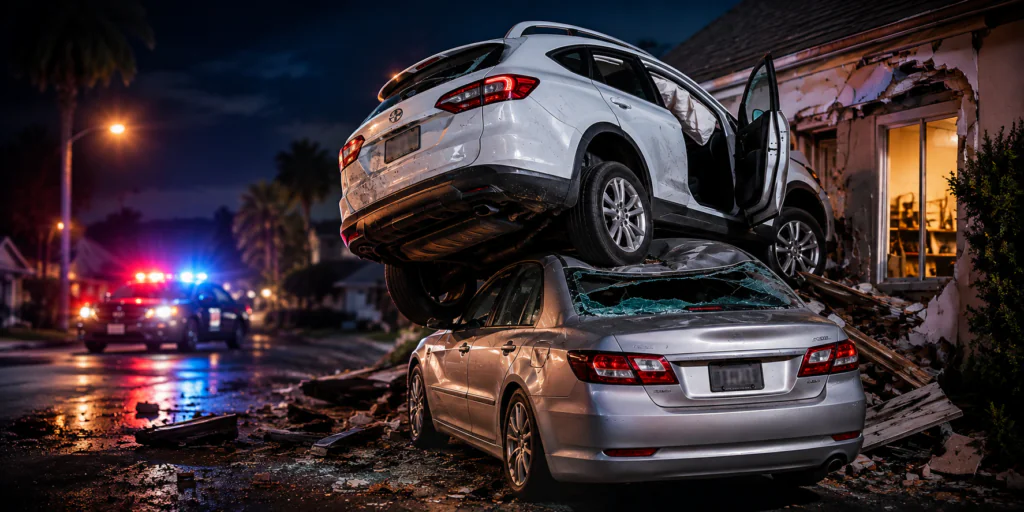
Imagine waking up to discover that your car—parked in your own driveway—was struck by another vehicle overnight. That’s essentially what happened during an unusual crash in Santa Ana on August 30, 2026. According to KTLA, a white SUV struck two vehicles parked in a residential driveway before hitting the front of a home. Video from the scene showed the SUV’s passenger side resting on top of one of the parked vehicles. Fortunately, police said no one inside the home was injured, and the SUV’s driver was also reported uninjured. The incident raises a practical question for Southern California vehicle owners: What should you do when your parked car is hit by another car? If your parked car is hit by another car, documenting the accident and arranging a professional damage assessment can help determine what was actually affected before repairs begin. Even when the most obvious damage appears cosmetic, an impact can potentially affect components behind bumpers or body panels that aren’t immediately visible. What Happened in the Santa Ana Parked-Car Crash? According to KTLA, the crash occurred at approximately 11:30 p.m. in the 700 block of South Shawnee Drive near West McFadden Avenue in Santa Ana. A Santa Ana Police Department spokesperson told the news outlet that a white SUV crashed into two vehicles parked in a driveway before striking the front of the residence. Video published by Citizen and referenced by KTLA showed the passenger side of the SUV resting on top of one of the parked vehicles following the impact. Police said no one inside the home was injured. The SUV’s driver, described as an adult woman, was also reported uninjured. The initial KTLA report did not provide a detailed assessment of the damage sustained by the parked vehicles. For that reason, it would be inappropriate to assume what specific components were damaged or what repairs those vehicles required. What the incident does illustrate, however, is how unexpectedly a parked vehicle can become involved in a serious collision. What Should You Check When a Parked Car Is Hit by Another Car? When a vehicle gets hit while parked, it’s easy to focus on the most obvious dent, scrape or broken component. But determining the actual extent of the damage may require looking beyond what can be seen from several feet away. Depending on where and how a vehicle was struck, an auto body repair assessment may include checking areas such as: Bumper and bumper components Fenders and quarter panels Doors Hood or trunk Exterior lights Vehicle glass Paint and exterior finishes Panel gaps and alignment Components located behind visibly damaged body panels Not every parked-car accident will affect all—or even several—of these areas. The point of an inspection is to determine what actually was damaged, rather than guessing based solely on how the exterior looks. Can a parked car have hidden collision damage? Yes. Collision damage isn’t always completely visible from the outside of the vehicle. For example, the bumper cover that drivers see on the exterior is only part of the bumper system. Depending on the impact, an inspection may be necessary to determine whether damage extends beyond the visible surface. Likewise, a dented panel may be obvious while damage behind that panel isn’t. Signs that deserve attention following an impact can include: New or uneven gaps between body panels A bumper that appears loose or displaced Doors, hood or trunk that no longer close normally Broken or misaligned lights Cracked glass New rubbing or unusual noises Visible deformation around the impact area These signs do not automatically mean a vehicle has serious hidden damage. They are reasons to have the affected area properly evaluated. Does a Damaged Bumper Need Repair After a Parked-Car Accident? A bumper is one of the most common areas involved when vehicles collide, but not every damaged bumper requires the same solution. Minor cosmetic damage is different from a bumper that has been cracked, displaced or subjected to a more significant impact. A professional evaluation helps determine whether bumper repair is appropriate or whether damaged components need another repair approach. This distinction matters because repairing a vehicle properly isn’t simply about making the outside look good again. The repair plan should reflect the damage that is actually present. What If Your Parked Car Was Hit in Your Own Driveway? The Santa Ana incident is particularly unusual because the vehicles reportedly were not parked along a busy roadway. They were sitting in a residential driveway. From the vehicle owner’s perspective, however, many of the basic steps following the collision remain similar. Once immediate safety concerns have been addressed: Photograph the vehicle before it is moved when safe to do so. Document multiple angles of the damage. Photograph the surrounding scene when relevant. Obtain the other driver’s information when available. Get police or incident-report information when applicable. Contact the appropriate insurance company. Arrange for the vehicle to be evaluated before deciding what repairs are necessary. If the vehicle appears unsafe, severely damaged or cannot be driven normally, don’t assume it should be driven simply because the engine starts. Whose Insurance Pays When Someone Hits Your Parked Car? There isn’t one answer that applies to every parked-car accident. How a claim is handled can depend on factors including who caused the collision, whether that driver was identified, available insurance coverage and the terms of the policies involved. That’s why documentation is important. Photographs, driver information, police or incident reports when applicable, and other evidence from the scene can become relevant during the claims process. For customers navigating repairs following a collision, Hovee’s Auto Body & Paint provides insurance claim assistance as part of its auto body services. The repair shop’s role is different from the insurance company’s role. The insurer determines coverage under the applicable policy, while the repair process focuses on identifying and repairing covered vehicle damage according to the approved repair plan. Does insurance cover a parked car hit in a driveway? Coverage depends on the circumstances of the accident and
Winnetka Rollover Crash Injures 8: What a Serious Collision Can Do to a Vehicle
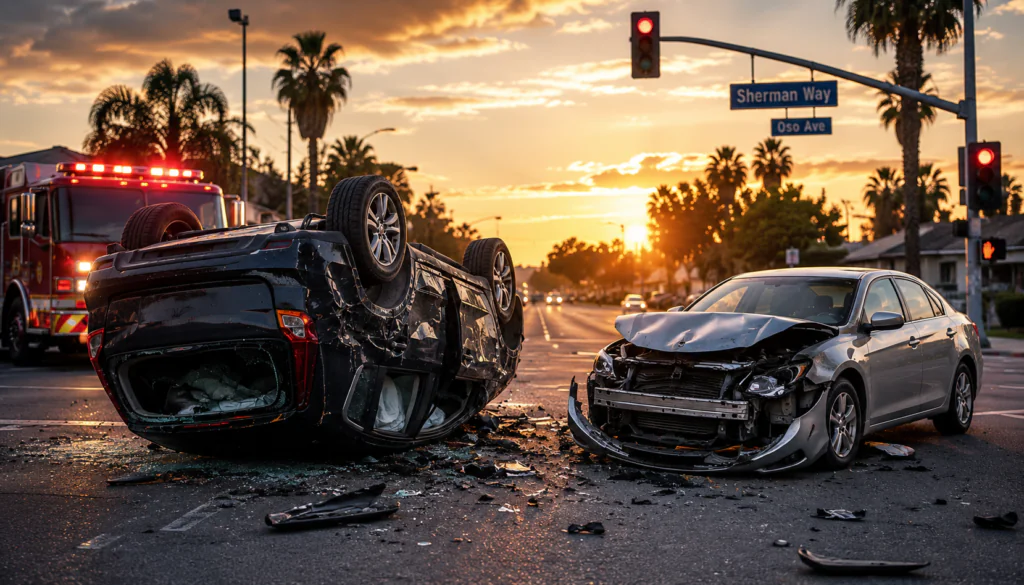
A serious two-car collision in Winnetka on August 30, 2026, left eight people with reported minor injuries and one vehicle overturned in the middle of the intersection, according to KTLA and the Los Angeles Fire Department. The crash happened near Sherman Way and Oso Avenue shortly before 4:30 p.m. Video from the scene showed a dark-colored SUV overturned with visible passenger-side damage and a shattered rear windshield. A lighter-colored sedan stopped nearby with heavy front-end damage, a bumper nearly torn off, and a hood pushed upward toward the windshield. While investigators had not released details about how the collision occurred, the crash illustrates an important issue for drivers: serious accident damage isn’t always limited to the parts of a vehicle that you can see. After a rollover or major impact, evaluating structural damage after a car accident can be an important part of determining the true extent of the vehicle’s damage. What Happened in the Winnetka Two-Car Crash? According to KTLA, Los Angeles Fire Department personnel responded to the intersection of Sherman Way and Oso Avenue in Winnetka shortly before 4:30 p.m. on Sunday, August 30. Fire officials reported that eight people with non-life-threatening injuries were being evaluated for possible transportation to a hospital. KTLA reported that video from the scene appeared to show: A dark-colored SUV overturned in the intersection Deployed airbags in the SUV Significant visible damage on the SUV’s passenger side A shattered rear windshield A lighter-colored sedan with heavy front-end damage A front bumper that was nearly torn off A hood pushed upward toward the windshield The Los Angeles Department of Transportation assisted with traffic control, and the Los Angeles Police Department was investigating the collision. Authorities had not released information explaining exactly how the crash occurred. It was also unclear from the initial reports whether all eight injured people were occupants of the vehicles. Those unknowns are important. The visible condition of the vehicles can be discussed, but it would be inappropriate to assume the cause of the crash or diagnose damage that was not documented. What Types of Vehicle Damage Can Happen in a Rollover Collision? A rollover is different from many ordinary fender-benders because different areas of the vehicle can potentially make contact during the accident. The actual damage will vary significantly from vehicle to vehicle, but areas that may require inspection after a rollover can include: Roof and upper body areas Doors and door openings Quarter panels Fenders Bumpers Vehicle glass Exterior body panels Structural areas beneath damaged body panels Even when the most obvious damage appears concentrated on one side of a vehicle, that does not necessarily tell the entire story. This is why a proper collision-damage evaluation should look beyond scratches, dents and broken exterior components. Can a rollover damage a vehicle’s structure? Potentially, yes. Modern vehicles are engineered with structural components designed to manage forces during a collision. When an impact is severe enough, those forces can potentially affect structural areas as well as exterior panels. That does not mean every rollover results in structural damage. It means the possibility should be evaluated rather than determined solely by looking at the exterior of the vehicle. If structural damage is identified, professional structural repair may be required as part of the overall collision-repair process. What Can Heavy Front-End Collision Damage Affect? The Winnetka collision provides another useful example because the second vehicle reportedly sustained heavy front-end damage. According to KTLA, the sedan’s bumper was nearly torn off and its hood had been pushed upward toward the windshield. Front-end collision damage can involve several different layers of a vehicle. The first layer is the damage a driver can easily see, such as: Torn or cracked bumper covers Bent or damaged hoods Damaged fenders Broken lights Scratches and damaged paint But the exterior appearance does not necessarily reveal everything that may have happened behind those components. For example, a bumper cover is the visible exterior portion of a larger bumper system. Damage behind the cover may not always be obvious while standing next to the vehicle. The same principle applies to other areas of a collision-damaged vehicle. That is why the question after a serious accident shouldn’t simply be: “How bad does my car look?” A better question is: “What was actually damaged?” Can Collision Damage Be Hidden Even When a Car Still Drives? Yes. Some collision-related damage may not be obvious during a quick visual inspection. A vehicle being able to start or move does not by itself establish that all accident damage is cosmetic. Depending on the collision, an auto body inspection may need to look at the damaged exterior components as well as areas behind them. Drivers should pay particular attention after an accident if they notice changes such as: Doors, hood or trunk no longer aligning normally New gaps between body panels Loose or damaged bumper components Broken lights or glass Parts rubbing against each other Visible deformation around the impact area New noises following the collision These signs don’t automatically mean a vehicle has structural damage, but they are reasons to have the vehicle professionally evaluated. How Does an Auto Body Shop Check for Structural Damage After an Accident? The process starts by determining the extent and location of the collision damage. A technician may need to examine both visible exterior damage and components that cannot be adequately evaluated from the outside. The exact inspection and repair process depends on the vehicle and accident. When structural damage is suspected or identified, the goal is not simply to make the exterior look good again. The affected areas need to be evaluated so an appropriate repair plan can be developed. At Hovee’s Auto Body & Paint, structural repair services are part of the shop’s collision-repair capabilities for vehicles requiring more than cosmetic body work. Does a Damaged Bumper Always Need to Be Replaced? No. Whether a bumper can be repaired or should be replaced depends on the type and extent of damage. Minor cosmetic damage is very different
210 Freeway Big Rig Crash in La Crescenta: Can Road Debris Damage Your Car?
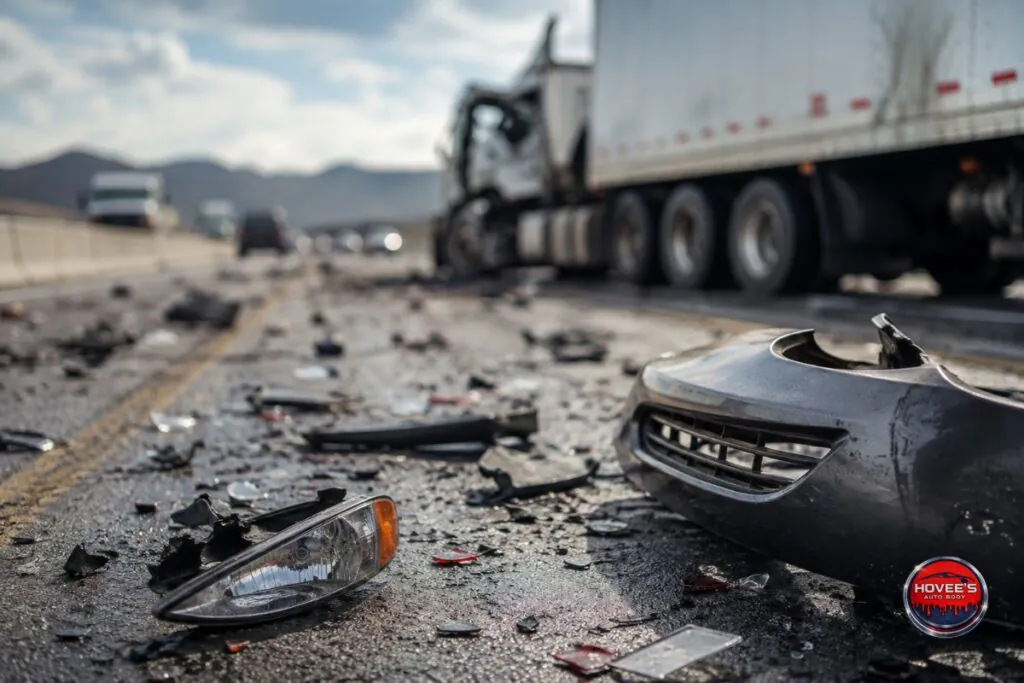
Introduction A collision involving two semitrucks on the 210 Freeway in La Crescenta on Wednesday, August 19, 2026, scattered debris across the roadway and forced authorities to close all westbound lanes at the scene. According to ABC7, the crash was reported shortly before 11 a.m. just east of Pennsylvania Avenue. One person was transported to a hospital in unknown condition. The cause of the collision remained under investigation at the time of reporting. While there is no indication in the available reporting that other vehicles were damaged by the scattered debris, the incident raises an important question for Southern California drivers: What should you do if road debris hits your car—or you have no safe way to avoid it? Road debris can potentially cause anything from relatively minor paint and body damage to broken exterior components or more significant damage, depending on what is struck, where it hits the vehicle and the severity of the impact. For drivers who experience road debris car damage, knowing what to inspect afterward can help determine whether the vehicle needs professional evaluation. What Happened on the 210 Freeway in La Crescenta? The August 19 collision involved two big rigs traveling on the westbound 210 Freeway in La Crescenta. ABC7 reported that the crash scattered piles of debris and prompted the closure of all westbound lanes at the scene. Eastbound traffic was unaffected. The incident occurred the same morning as a separate big-rig fire farther west on the 210 Freeway near Sunland. That earlier incident also resulted in westbound lane closures. These were separate incidents. The cause of the La Crescenta collision was still under investigation when the initial report was published. What Kind of Car Damage Can Road Debris Cause? Road debris comes in many forms, and the resulting vehicle damage depends heavily on the object and the circumstances. Something small that strikes a vehicle at freeway speed can affect a different part of the vehicle than a larger object lying directly in its path. Potential areas that may be affected include: Front bumper covers Grilles Hoods Fenders Headlights and exterior lighting Windshields Side mirrors Exterior paint and clear coat Lower body panels Underbody components That does not mean every debris strike causes serious damage. A professional evaluation may be appropriate when there is visible damage or when something about the vehicle appears different following the impact. What Should You Do If Road Debris Hits Your Car? Your immediate priority should be maintaining control of the vehicle and getting to a safe location. Trying to avoid an object with a sudden maneuver can introduce additional risks, particularly in high-speed or congested freeway traffic. Once you can safely stop, consider the following steps. Look for Visible Damage Walk around the vehicle when it is safe to do so. Look for obvious signs such as: Cracked or loose bumper components Dents Scratches or gouges Broken lights Damaged grille components Cracked glass Loose exterior trim Paint damage Panels that appear misaligned Photograph anything unusual. Pay Attention to Changes in the Vehicle Visible body damage may not be the only reason to have the vehicle checked. If you notice unusual sounds, loose components, warning indicators or changes in the way the vehicle operates after striking debris, don’t assume everything is fine simply because the exterior damage appears minor. The appropriate next step depends on what was hit and how the vehicle was affected. Document What Happened If it can be done safely, record the location, approximate time and circumstances surrounding the incident. Photographs of the vehicle and its damage can also be useful when discussing the incident with an insurance company or repair facility. Avoid putting yourself or others in danger to photograph debris that remains in active traffic lanes. Can Road Debris Cause Hidden Car Damage? It can. A vehicle’s exterior includes many components that can conceal mounting points, reinforcement areas and other parts behind the visible surface. For example, a bumper cover may show an obvious scrape or crack while the full extent of the affected area cannot be determined solely by looking at the outside. Likewise, an object that passes underneath a vehicle could potentially affect areas that aren’t visible during a normal walk-around. The important point is not to assume that hidden damage exists after every incident. Rather, the appearance of the vehicle alone may not always reveal the complete extent of damage. An auto body professional can evaluate the affected area and determine what actually needs repair. Can Road Debris Damage Your Car’s Paint? Yes. Road debris can chip, scratch or otherwise damage automotive paint depending on the material, impact and location. Paint damage can range from a small surface mark to a deeper chip or scratch. If damage penetrates through the protective paint layers, leaving the affected area untreated may expose the underlying material. Professional auto paint repair may involve considerably more than simply applying matching paint to the damaged spot. Depending on the repair, the process can include surface preparation, color matching, refinishing and blending with adjacent areas to produce a consistent finish. Hovee’s Auto Body & Paint provides auto body and paint repair for accident-damaged vehicles from its Chatsworth shop. Does a Damaged Bumper Need to Be Replaced After Hitting Debris? Not necessarily. Some bumper damage can be repaired, while other damage may require component replacement. The appropriate repair depends on factors such as: Location of the damage Extent of cracking or deformation Condition of mounting areas Components affected behind the bumper cover Vehicle-specific repair requirements That’s why the repair decision should follow an evaluation of the actual damage rather than being based only on how the bumper looks from several feet away. What If the Road Debris Damage Looks Minor? Minor-looking damage doesn’t automatically mean a major repair is necessary. It also doesn’t mean the damage should automatically be ignored. For example, what appears to be a small cosmetic issue could be limited to the paint surface—or the affected component may need closer evaluation. Look for changes such
5 Freeway Bus Crash Highlights the Importance of Proper Collision Repair After an Accident
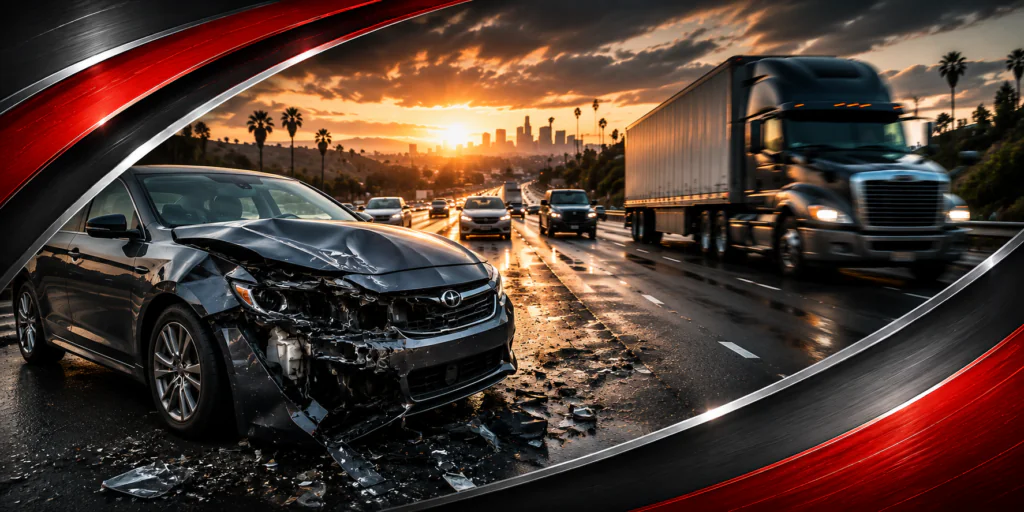
12 Hospitalized After Charter Bus and Semi-Truck Collide on 5 Freeway A serious collision involving a charter bus and semi-truck on California’s 5 Freeway sent 12 people to the hospital on Sunday, August 10, 2026. The crash occurred at approximately 5:24 p.m. on the southbound 5 Freeway near the San Elijo viewpoint near Encinitas in San Diego County. According to information reported by KTLA, a photograph from the accident scene showed substantial front-end damage to the charter bus, including a broken windshield. The passengers suffered injuries ranging from minor to moderate. According to the California Highway Patrol, none of the injuries were considered life-threatening. The cause of the collision remains under investigation. CHP also used the incident to remind motorists about the importance of remaining alert, avoiding distractions and maintaining a safe following distance, particularly when driving around large commercial vehicles. What Can Drivers Learn From a Serious Freeway Collision? While this particular accident occurred in San Diego County, the incident carries an important reminder for drivers throughout California—including motorists traveling the busy freeways surrounding Los Angeles and the San Fernando Valley. Freeway collisions can happen quickly, and higher-speed impacts can result in significant vehicle damage. The obvious damage is often what attracts attention first: a crushed bumper, damaged fender, broken headlight, bent hood or shattered windshield. But determining what it takes to properly repair a collision-damaged vehicle can require looking beyond its exterior appearance. Can a Car Have Hidden Damage After an Accident? Yes. Depending on the type and severity of the collision, some accident damage may not be immediately apparent from looking at the vehicle. The exterior bumper cover, for example, is only one part of the bumper system. Damage may potentially exist behind the visible surface. Likewise, an impact affecting one portion of the vehicle can require inspection of surrounding components and structural areas. Signs that deserve attention after a collision can include: Changes in body-panel alignment Doors, hoods or trunks that no longer close normally Visible bumper or reinforcement damage Unusual gaps between body panels Broken lights or damaged mounting areas Steering or handling that feels different Unusual noises after the accident Visible damage around structural areas The appropriate repair depends on the vehicle, the location of the impact and the extent of the actual damage. What Should You Do After a Car Accident? The people involved in an accident always come first. Once immediate safety and medical concerns have been addressed and law enforcement requirements have been handled, attention can turn toward documenting the accident and beginning the insurance and collision repair process. Document the Accident and Vehicle Damage When conditions are safe, photograph the damaged vehicle from multiple angles. Capture both close-up images of the damage and wider photographs showing the affected areas of the vehicle. This documentation may be helpful when discussing the claim with your insurance carrier and repair facility. Contact Your Insurance Company If you intend to make an insurance claim, notify your insurer and obtain your claim information. Keep your claim number and adjuster information available so it can be referenced during the repair process. Don’t Judge Collision Damage Only by Appearance A damaged bumper or body panel doesn’t necessarily reveal everything that happened during the impact. A professional evaluation can help identify the damaged areas and determine what repair procedures may be required. Be Careful About Driving a Damaged Vehicle If you are uncertain whether the vehicle is safe to drive after an accident, avoid making that determination based only on appearance. When appropriate, arrange for the vehicle to be transported rather than taking unnecessary risks. What Does Collision Repair Include? Collision repair is not simply about removing dents or making damaged paint look new again. Depending on the accident, the repair process may involve multiple procedures. These can include: Damage evaluation Vehicle disassembly Bumper repair or replacement Body-panel repair Panel replacement Structural repair Frame straightening when appropriate Paint preparation Color matching Refinishing Reassembly Final inspection A minor collision and a major freeway accident can require very different repair processes. That is why the vehicle needs to be evaluated based on its actual damage. Why Structural Damage Matters After a Collision One of the most important distinctions after a significant accident is the difference between cosmetic damage and structural collision damage. A dented exterior panel is easy to see. Damage affecting structural areas of a vehicle may require a much more involved evaluation and repair process. For drivers searching for frame damage repair near me, structural repair, or a car accident body shop, the objective should be finding a repair facility experienced in repairing collision-related damage—not simply improving the vehicle’s appearance. How Does Insurance Collision Repair Work? Insurance claims are another major concern for drivers after an accident. The process can involve documenting the damage, obtaining an estimate, communicating with an adjuster, determining repair procedures and addressing additional damage discovered during the repair process. This is one reason many drivers search for terms such as: “body shop that works with insurance” or “insurance collision repair near me.” An experienced collision repair shop can work with the vehicle owner during the repair portion of the insurance claim process and help document the repairs required for the damaged vehicle. Can You Choose Your Own Auto Body Shop After an Accident? California drivers should understand their options when selecting a repair facility. An insurance company may provide information about repair shops, but drivers can also evaluate collision repair facilities themselves. When choosing a body shop after an accident, consider questions such as: Does the shop specialize in collision repair? Can it perform structural repairs? Does it regularly work with insurance claims? How long has the business been operating? Does it warranty its body and paint work? Does the shop have a strong local reputation? Can it handle both body repairs and refinishing? The goal should be to choose a shop capable of addressing the complete collision repair—not simply the most visible damage. Collision Repair in Chatsworth and the San Fernando Valley
210 Freeway Fatal Crash in Azusa: What Drivers Should Know About Collision Repair After Sudden Traffic Backups
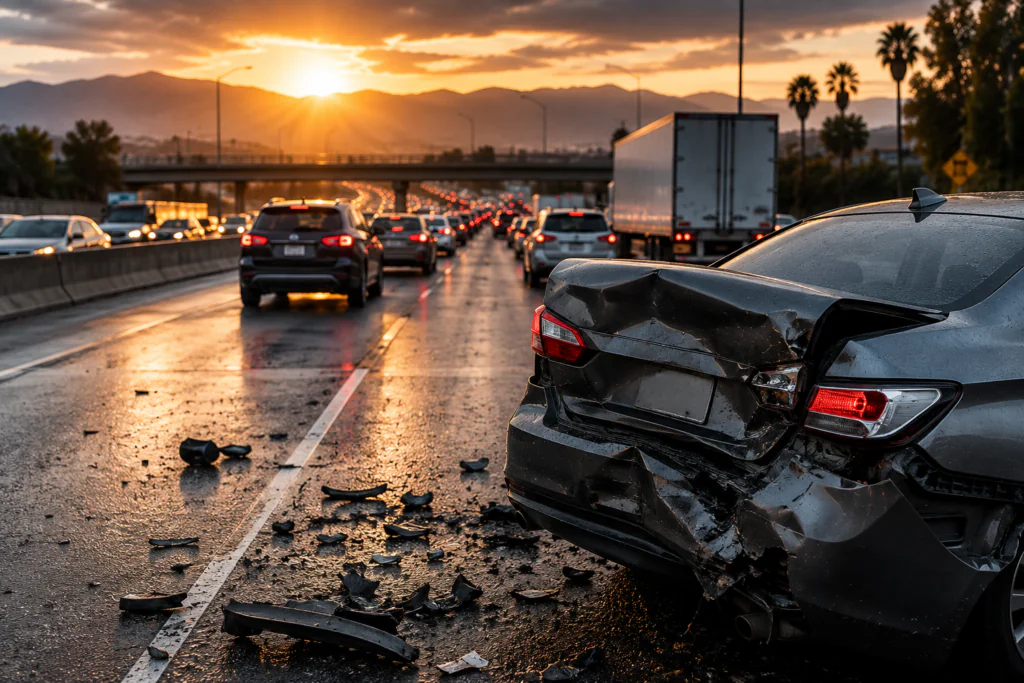
Fatal Crash Shuts Down Westbound 210 Freeway in Azusa A fatal collision involving a pedestrian temporarily shut down the westbound 210 Freeway in Azusa during the Wednesday morning commute on August 12, 2026. According to reports from KTLA and ABC7, the incident occurred shortly after 3:30 a.m. near Citrus Avenue. California Highway Patrol officers and Los Angeles County Fire Department firefighters responded to the scene. All westbound lanes were initially closed, and a SigAlert was issued shortly afterward. The HOV lane was later reopened, allowing vehicles to move slowly past the scene while the traffic backup continued to grow. KTLA’s aerial coverage showed traffic extending for miles. Shortly before 6:30 a.m., CHP announced that the freeway had been cleared and all lanes had reopened. The cause of the crash was unknown based on the information available at the time of reporting. Why Major Freeway Incidents Matter Even If You’re Miles From the Crash When a serious accident shuts down several freeway lanes, the effects can extend far beyond the original collision scene. Drivers approaching the congestion may suddenly encounter: Rapidly slowing traffic Stop-and-go conditions Lane changes Emergency vehicles Drivers attempting to exit the freeway Vehicles merging into remaining open lanes That makes attention and following distance especially important. A crash occurring miles ahead can quickly change normal freeway speeds into stopped traffic. How Can Traffic Backups Lead to Rear-End Collisions? Rear-end collisions occur for many reasons, and the sources reporting the Azusa crash do not establish that any secondary crashes occurred as a result of this incident. However, sudden freeway congestion illustrates why drivers should remain prepared for changing traffic conditions. A driver approaching stopped traffic needs sufficient time and distance to recognize the slowdown and respond. Distraction, following too closely or failing to recognize changing traffic conditions can reduce that margin. The safest response is to stay attentive and adapt to the traffic conditions ahead. What Should You Do If You’re Rear-Ended in Freeway Traffic? If another vehicle hits you during a traffic slowdown, your first priority is the safety of everyone involved. Once immediate safety concerns have been addressed, there are several practical steps that can help with the subsequent insurance and repair process. Document the Accident When it is safe, photograph the vehicles and visible damage. Take both close-up and wider photographs. If the accident will involve an insurance claim, this documentation may be useful when discussing the damage with your insurer and repair facility. Exchange the Necessary Information Follow applicable requirements for exchanging driver, vehicle and insurance information. Pay Attention to How the Vehicle Feels Don’t focus exclusively on the appearance of the bumper. If the vehicle behaves differently after the collision or you have concerns about its condition, have the damaged areas professionally evaluated. Start the Insurance Process If you plan to make a claim, contact your insurance carrier and obtain the appropriate claim information. Hovee’s also provides insurance claim assistance for drivers navigating the repair process after an accident. Can a Rear-End Collision Cause Hidden Damage? Yes. Depending on the impact, damage may not necessarily be limited to the exterior surface that you can see. Modern bumper systems consist of more than the painted bumper cover visible from outside the vehicle. Following an accident, a repair facility may need to evaluate the affected area to determine what was actually damaged. Potential areas requiring attention can include: Bumper covers Reinforcement components Mounting areas Body panels Trunk or cargo areas Lighting components Paint and refinishing Structural areas, depending on the collision The extent of the repair depends on the individual vehicle and impact. Does a Damaged Bumper Always Need to Be Replaced? No. Whether a bumper or another damaged component should be repaired or replaced depends on the type and extent of the damage and the appropriate repair procedures for the vehicle. That determination should come after the damaged area has been evaluated. The objective of professional accident repair isn’t simply to make the exterior look better. It’s to identify what was damaged and determine the appropriate repair. Why Collision Repair Is More Than Fixing a Dent Following an accident, collision work can involve much more than repairing the most visible dent. Depending on the damage, the repair process may involve: Damage assessment Disassembly Bumper repair or replacement Body-panel repair Panel replacement Structural repair Frame straightening when appropriate Paint matching Refinishing Reassembly Final inspection Hovee’s provides dedicated collision repair services for vehicles damaged in minor and major accidents. What If the Damage Looks Minor? A low-speed rear-end accident may produce less damage than a severe freeway collision, but appearance alone doesn’t determine the complete repair. A bumper cover can sometimes hide damage to components behind it. Drivers should also pay attention to changes such as: New gaps between panels A trunk or hatch that doesn’t close normally Loose bumper components Broken lights Unusual noises Changes in how the vehicle drives If something seems different after the accident, mention it when the vehicle is evaluated. How Does Auto Body Repair Fit Into the Process? Not every collision results in major structural damage. Some vehicles primarily need exterior body repairs, damaged panels, bumper work, paint matching and refinishing. Hovee’s auto body repair services address accident-related body damage and can be combined with other repair procedures when required. The appropriate repair depends on what the collision actually damaged. What Should You Look for in a Collision Repair Shop? After an accident, drivers frequently search for terms such as “collision repair near me,” “car accident repair near me,” “body shop that works with insurance,” or “bumper repair after accident.” But proximity shouldn’t be the only consideration. Ask whether the repair facility has experience with: Accident-related repairs Structural damage Insurance claims Bumper and panel replacement Paint matching Refinishing Major collision damage Also consider how long the business has operated, its reputation and whether its body and paint work is backed by a warranty. Collision Repair in Chatsworth and the San Fernando Valley The August 12 accident occurred in Azusa, not Chatsworth, and Hovee’s Auto Body &
How Long Does Collision Repair Take? What Drivers in Woodland Hills and Chatsworth, CA Should Expect
After an accident, one of the first questions drivers ask is, “How long will the repairs take?” The answer depends on several factors, including the extent of the damage, insurance approvals, parts availability, and the type of repairs required. For drivers searching for collision repair in Woodland Hills, CA, understanding the repair timeline helps reduce stress and set realistic expectations during the repair process. Modern vehicles are more advanced than ever before. Even relatively minor accidents throughout Woodland Hills, Chatsworth, Northridge, Canoga Park, Porter Ranch, Reseda, and surrounding Southern California communities may require detailed inspections, safety calibrations, and specialized repairs that affect repair timelines. Quick Answer: How Long Does Collision Repair Usually Take? Collision repair timelines vary depending on the severity of damage, parts availability, insurance approvals, structural repairs, paint work, and safety system calibrations. Minor bumper or cosmetic repairs may take a few days, while major structural collision repairs can require several weeks to complete properly. At Hovee’s Auto Body & Paint, drivers throughout the San Fernando Valley trust experienced technicians for professional collision repair, clear communication, and high-quality workmanship. Since 1962, Hovee’s Auto Body & Paint has proudly helped Southern California drivers restore vehicles safely with modern repair technology, insurance claim assistance, and attention to detail throughout every stage of the repair process. Why Collision Repair Timelines Vary No two accidents are exactly the same. Some vehicles only require cosmetic repairs, while others may involve hidden structural damage, sensor recalibration, suspension repairs, or replacement parts that extend repair timelines. Several key factors influence how long repairs may take. Factor #1: Extent of Vehicle Damage The severity of collision damage is usually the biggest factor affecting repair time. Minor Cosmetic Repairs Repairs involving: Small dents Scratches Paint transfer Minor bumper scuffs may often be completed within a few days depending on scheduling and paint curing requirements. Moderate Collision Repairs Accidents involving: Bumper replacement Fender damage Door repairs Panel replacement Minor suspension repairs may require additional time due to parts ordering and refinishing processes. Major Structural Repairs Collisions involving: Frame damage Structural movement Airbag deployment Suspension damage Advanced safety systems typically require significantly longer repair timelines because of the complexity involved. Factor #2: Insurance Approval Process Insurance claims often affect repair timelines. After an accident, insurance companies typically provide an initial estimate based on visible damage. However, once repairs begin and damaged components are removed, technicians frequently discover hidden issues underneath. This may require: Supplemental estimates Additional documentation Insurance adjuster approvals Updated repair authorizations At Hovee’s Auto Body & Paint, the repair team works directly with insurance companies to help streamline approvals and reduce unnecessary delays. Factor #3: Parts Availability Replacement part availability can significantly impact repair timelines. Some parts may be available immediately, while others require: Manufacturer ordering Shipping delays Backorders Specialized sourcing Modern vehicles often contain highly specialized components, especially with newer models featuring advanced safety technology. Global supply chain disruptions have also affected parts availability throughout the automotive industry in recent years. Factor #4: Paint and Refinishing Process Professional auto paint work involves much more than simply spraying color onto a vehicle. The refinishing process may include: Surface preparation Bodywork smoothing Primer application Paint matching Clear coat application Curing and drying time Final polishing At Hovee’s Auto Paint Services, advanced paint matching systems help restore factory-quality finishes while ensuring long-term durability. Proper curing time is essential for quality results and should never be rushed. Factor #5: Safety System Calibrations Modern vehicles contain increasingly advanced safety technology. After collision repairs, many vehicles require recalibration of systems such as: Blind spot monitoring Adaptive cruise control Lane departure warning Collision avoidance systems Backup cameras Parking sensors These calibrations require specialized equipment and procedures to ensure systems operate correctly after repairs. Safety system recalibration adds important time to the repair process but helps restore proper vehicle safety performance. Typical Collision Repair Timeline Breakdown While every repair is different, most collision repairs follow a general sequence. Initial Inspection and Estimate Timeline: 1–2 Days Technicians inspect the vehicle, document visible damage, and coordinate with insurance companies. Vehicle Disassembly and Hidden Damage Inspection Timeline: 1–3 Days Removing damaged panels often reveals additional hidden damage underneath. Insurance Supplements and Approvals Timeline: Several Days Depending on Insurance Response Additional approvals may be needed if hidden damage is discovered. Structural and Body Repairs Timeline: Several Days to Multiple Weeks Repair time depends on structural complexity and replacement parts. Paint and Refinishing Timeline: Several Days Professional refinishing requires preparation, paint application, curing, and quality control. Reassembly and Safety Calibration Timeline: 1–3 Days Technicians reinstall components and calibrate safety systems. Final Quality Inspection Timeline: 1 Day The vehicle undergoes final inspections before delivery to the customer. Why Quality Repairs Should Never Be Rushed Many drivers understandably want their vehicle back as quickly as possible. However, rushing repairs can create serious long-term problems. Poor repairs may result in: Paint mismatches Structural weakness Safety system failures Alignment issues Premature rust Reduced resale value Professional collision repair facilities prioritize accuracy, safety, and long-term durability over rushing vehicles through the process. Why Hidden Damage Often Delays Repairs One of the biggest reasons repair timelines change is hidden damage. Even low-speed collisions may damage: Frame supports Suspension components Sensor brackets Cooling systems Electrical wiring Crash absorbers These issues are frequently invisible until repairs begin. Professional inspections help identify these problems before repairs are completed improperly. Rental Cars During Collision Repairs Many drivers worry about transportation during repairs. Rental car coverage depends on your insurance policy, but many policies include temporary rental reimbursement. Factors affecting rental coverage may include: Policy limits Repair timeline Fault determination Coverage type At Hovee’s Auto Body & Paint, the team helps customers coordinate rental assistance whenever possible during repairs. How Communication Helps Reduce Customer Stress One of the biggest frustrations during collision repair is uncertainty. Customers often become stressed when they do not receive updates regarding: Repair progress Insurance approvals Parts delays Completion timelines At Hovee’s Auto Body & Paint, clear communication remains a major priority throughout the repair
Bumper Repair vs Full Collision Repair: Which Does Your Vehicle Need in Canoga Park, CA?
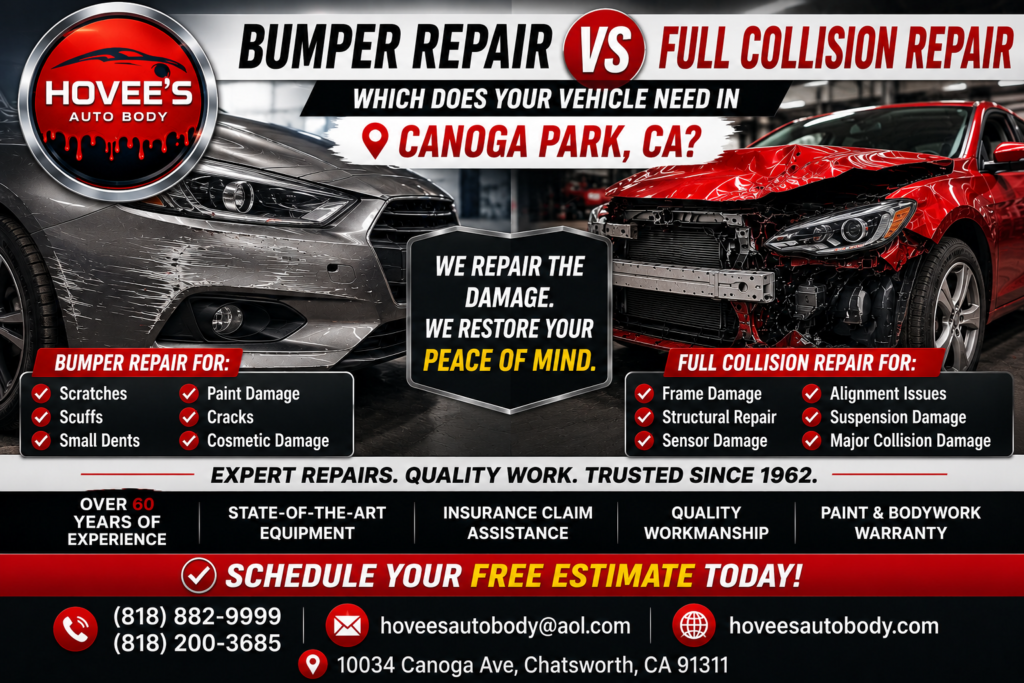
After an accident, many drivers immediately ask the same question: “Can this be repaired, or does my vehicle need more extensive collision work?” Sometimes the answer is simple. Other times, what appears to be minor bumper damage may actually involve hidden structural or safety-related issues underneath. For drivers searching for bumper repair in Canoga Park, CA, understanding the difference between bumper repair and full collision repair can help you make informed decisions after an accident. Modern vehicles are far more advanced than many people realize. Today’s bumpers contain sensors, impact absorbers, radar systems, cameras, and structural supports designed to protect both passengers and pedestrians. Even seemingly minor accidents throughout Canoga Park, Chatsworth, Woodland Hills, Northridge, Porter Ranch, and surrounding Southern California communities may require professional inspections to identify hidden damage. Quick Answer: What Is the Difference Between Bumper Repair and Collision Repair? Bumper repair focuses primarily on repairing or replacing damaged bumpers, scratches, cracks, paint damage, or minor impact damage. Full collision repair involves more extensive repairs that may include structural damage, frame alignment, suspension repairs, sensor calibration, body panel replacement, and safety system restoration after an accident. At Hovee’s Auto Body & Paint, drivers throughout Canoga Park and the San Fernando Valley trust experienced technicians to inspect vehicle damage carefully and recommend the proper repair solution. Since 1962, Hovee’s Auto Body & Paint has proudly helped Southern California drivers restore vehicles safely with high-quality workmanship, modern collision repair technology, and professional customer service. Why Modern Bumpers Are More Important Than Ever Many people still think bumpers are simple plastic covers attached to the front or rear of a vehicle. In reality, modern bumper systems are highly engineered safety components. Today’s bumpers often contain: Impact absorbers Steel reinforcement bars Parking sensors Radar systems Collision avoidance sensors Backup cameras Blind spot monitoring technology These systems are designed to absorb crash energy and help reduce damage during low-speed collisions. Even minor impacts can affect the components hidden underneath the visible bumper cover. When Bumper Repair May Be Enough Not every accident requires major collision repair. In many cases, bumper repair alone may restore both appearance and function if the underlying structure remains unaffected. Minor Cosmetic Scratches Small surface scratches often affect only the paint or clear coat. Professional refinishing can restore appearance while protecting against long-term paint damage. Paint Transfer Low-speed parking lot impacts frequently leave paint transfer marks that may be removed or refinished professionally. Small Dents or Scuffs Minor bumper dents sometimes can be repaired without full replacement if structural components underneath remain intact. Minor Cracks Small cracks in plastic bumper covers may sometimes be repaired depending on severity and location. At Hovee’s Bumper Repair Services, technicians evaluate bumper damage carefully to determine whether repair or replacement is the safest and most effective solution. When Full Collision Repair May Be Necessary While some bumper damage appears minor, the underlying impact may affect structural or safety-related systems. Full collision repair may become necessary when accidents involve: Frame damage Suspension issues Sensor damage Structural movement Airbag system involvement Panel misalignment Multiple damaged components Hidden Structural Damage The visible bumper may absorb impact while transferring force into the vehicle structure underneath. Hidden damage may affect: Frame rails Crash supports Mounting brackets Reinforcement bars Suspension geometry Professional inspections help identify damage that cannot be seen externally. Sensor and Safety System Damage Modern bumpers frequently house advanced safety systems. Even low-speed accidents may require recalibration or replacement of: Parking sensors Blind spot monitoring systems Adaptive cruise control sensors Collision avoidance systems Backup cameras Ignoring these systems may create serious safety risks. Common Types of Bumper Damage Seen in Southern California Drivers throughout Canoga Park, Chatsworth, Woodland Hills, Northridge, and surrounding communities frequently experience bumper-related accidents caused by: Parking lot impacts Rear-end collisions Stop-and-go freeway traffic Distracted driving accidents Tight parking spaces Low-speed intersection collisions Southern California traffic congestion contributes to a high number of bumper-related repairs every year. Why DIY Bumper Repairs Often Create Bigger Problems Some drivers attempt temporary bumper repairs using DIY kits or low-cost cosmetic fixes. Unfortunately, these shortcuts often fail to address hidden damage underneath. DIY bumper repairs may: Hide structural issues Prevent proper sensor operation Lead to paint mismatches Reduce resale value Create poor fitment Allow hidden rust or damage to worsen Professional inspections help ensure the entire bumper system and surrounding structure are evaluated properly. How Professional Bumper Repair Works At Hovee’s Auto Body & Paint, bumper repairs involve much more than surface cosmetic work. Step 1: Damage Inspection Technicians inspect: Bumper covers Impact absorbers Mounting brackets Structural supports Sensors and electronics Step 2: Disassembly The bumper may be removed to inspect hidden components underneath. This often reveals damage not visible during the initial inspection. Step 3: Repair or Replacement Depending on the extent of damage, technicians may: Repair scratches and dents Refinish paint surfaces Repair cracks Replace damaged components Install new bumper covers Step 4: Paint Matching and Refinishing Advanced paint matching technology helps restore factory appearance. At Hovee’s Auto Paint Services, professional refinishing systems help ensure smooth color blending and long-lasting durability. Step 5: Safety System Calibration If sensors or safety systems were affected, recalibration may be required before the vehicle is returned to the customer. Why Proper Collision Repair Protects Vehicle Value Many buyers and dealerships inspect repair quality closely. Poor bumper repairs may create: Visible panel gaps Paint inconsistencies Loose fitment Sensor malfunctions Reduced resale value Professional collision repair helps preserve: Vehicle appearance Safety system functionality Structural integrity Long-term value How Insurance Claims Work for Bumper Damage Insurance coverage for bumper repairs depends on: Policy type Fault determination Damage severity Deductibles Many drivers are surprised to learn that what initially appears to be simple bumper damage may involve supplemental repairs once hidden damage is discovered. At Hovee’s Auto Body & Paint, the team works directly with insurance companies to help streamline approvals and supplemental estimates when additional repairs become necessary. Why Advanced Vehicle Technology Changes Collision Repairs Modern vehicles are increasingly complex. Even small
How Insurance Claims Work for Collision Repair in Chatsworth and Woodland Hills, CA
Getting into an accident is stressful enough. Between dealing with vehicle damage, speaking with insurance companies, arranging transportation, and worrying about repair costs, many Southern California drivers quickly become overwhelmed. For drivers searching for collision repair in Chatsworth, CA, understanding how the insurance claim process works can make the experience smoother and far less confusing. Many people assume the insurance company controls the entire repair process. In reality, California drivers have important rights regarding where their vehicle gets repaired and how repairs are handled. Whether your accident happened in Chatsworth, Woodland Hills, Northridge, Porter Ranch, Canoga Park, Reseda, West Hills, or nearby areas, knowing the steps involved in collision repair insurance claims can help you avoid delays, reduce stress, and protect your vehicle’s long-term value. Quick Answer: How Do Insurance Claims Work for Collision Repair? After an accident, drivers typically file a claim with their insurance company, receive a damage estimate, choose a collision repair shop, and coordinate repairs through both the insurance provider and repair facility. Professional collision repair shops often help customers manage insurance paperwork, supplemental estimates, inspections, and repair approvals throughout the process. At Hovee’s Auto Body & Paint, customers throughout the San Fernando Valley rely on experienced technicians and insurance claim assistance to simplify the repair process after an accident. Since 1962, Hovee’s Auto Body & Paint has helped Southern California drivers restore vehicles safely while working directly with insurance providers to help minimize complications and delays. What To Do Immediately After an Accident The moments after an accident are often chaotic. Staying calm and taking the proper steps helps protect your safety and strengthens your insurance claim documentation. Step 1: Check for Injuries Your safety always comes first. Check yourself and passengers for injuries. If anyone is hurt, call emergency services immediately. Step 2: Move to a Safe Location If possible, move vehicles away from traffic to reduce additional risks. Busy Southern California roads and freeways can quickly become dangerous after an accident. Step 3: Contact Law Enforcement if Necessary Police reports may become important for insurance documentation, especially when: There are injuries Major damage occurred Liability is disputed Multiple vehicles are involved Step 4: Exchange Information Gather: Insurance information Driver license details Vehicle registration Contact information Step 5: Document the Accident Scene Take photos of: Vehicle damage License plates Road conditions Traffic signs Intersection layout Visible injuries if appropriate Detailed documentation often helps prevent insurance claim disputes later. Understanding the Different Types of Insurance Coverage Many drivers do not fully understand their coverage until an accident occurs. Several types of insurance coverage may affect collision repairs. Collision Coverage Collision coverage typically helps pay for repairs to your own vehicle after an accident, regardless of fault. Liability Coverage Liability insurance generally covers damage you cause to other vehicles or property. Comprehensive Coverage Comprehensive coverage usually applies to non-collision damage such as: Theft Vandalism Falling objects Weather damage Fire damage Uninsured Motorist Coverage This coverage may help if the at-fault driver lacks insurance. Understanding your policy helps you better navigate repair approvals and potential out-of-pocket costs. You Have the Right To Choose Your Collision Repair Shop One of the biggest misconceptions about insurance claims is that drivers must use the repair shop recommended by the insurance company. In California, drivers generally have the legal right to choose the collision repair facility they trust. Insurance companies may suggest “preferred” repair facilities, but the final decision belongs to the vehicle owner. Choosing an experienced independent repair shop often provides: Better communication Higher-quality repairs More personalized service Greater repair transparency Closer attention to detail At Hovee’s Auto Body & Paint, customers throughout Chatsworth and Woodland Hills receive professional repair guidance and direct insurance claim support throughout the process. How the Insurance Estimate Process Works After filing a claim, the insurance company typically prepares an initial repair estimate. This estimate may involve: Photos submitted digitally In-person inspections Third-party adjusters Repair facility evaluations However, the initial estimate often represents only visible damage. Once repairs begin, technicians frequently discover hidden damage underneath body panels or structural components. What Is a Supplemental Estimate? A supplemental estimate is an updated repair estimate created after additional hidden damage is discovered during the repair process. Supplements are extremely common in collision repair. Examples of hidden damage may include: Frame movement Broken brackets Sensor damage Suspension damage Internal bumper support damage Electrical system issues Professional collision repair facilities communicate directly with insurance companies to document supplemental repairs properly. This helps ensure necessary repairs receive approval before work continues. Why Modern Vehicles Make Insurance Claims More Complex Today’s vehicles contain far more technology than older cars. Modern repairs may involve: Radar systems Backup cameras Blind spot sensors Adaptive cruise control Lane departure systems Airbag modules Computerized calibrations Even seemingly small accidents may require advanced diagnostics and recalibration procedures. Insurance adjusters and repair facilities must account for these systems during the repair process. Rental Car Assistance During Collision Repairs Many drivers worry about transportation while their vehicle is being repaired. Rental coverage depends on your policy, but many insurance plans include temporary rental assistance. Rental availability may depend on: Policy limits Repair timeline Fault determination Rental reimbursement coverage At Hovee’s Auto Body & Paint, the team helps customers coordinate rental assistance whenever possible to minimize disruptions during repairs. How Long Insurance Claim Repairs Usually Take Repair timelines vary depending on several factors. Some repairs may take only a few days, while major structural repairs can require multiple weeks. Factors affecting repair time include: Insurance approvals Supplemental estimates Parts availability Structural damage severity Paint curing times Safety calibrations Many drivers become frustrated with repair delays, but quality repairs require careful attention and proper procedures. Why Cheap Repairs Can Become Expensive Later After an accident, some drivers look for the cheapest repair option available. Unfortunately, low-cost shortcuts often create bigger problems later. Poor collision repairs may result in: Paint mismatches Premature rust Frame misalignment Water leaks Unsafe structural repairs Sensor malfunctions Reduced resale value Proper collision repair helps restore both