4-Vehicle Crash on 14 Freeway Near Sand Canyon Road: What Drivers Should Know About Collision Damage
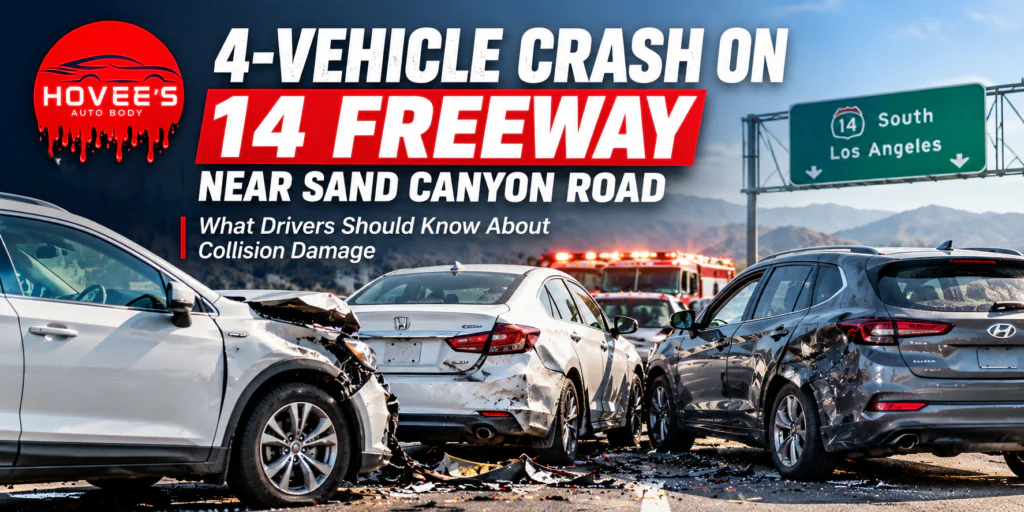
Quick Answer: Why Can a Four-Vehicle Collision Cause Hidden Vehicle Damage? A four-vehicle collision can involve multiple impacts, potentially damaging more than the exterior bumpers and body panels. Depending on the circumstances, damage may affect bumper reinforcements, mounting points, structural components, suspension, sensors and other vehicle systems. A professional collision damage assessment helps determine what needs to be repaired or replaced according to the vehicle manufacturer’s procedures. For drivers in Chatsworth and the San Fernando Valley, Hovee’s Auto Body & Paint provides collision repair, auto body repair, structural repair and insurance claim assistance following an accident. Four Vehicles Involved in Morning Crash on Southbound 14 Freeway A four-vehicle traffic collision disrupted the Tuesday morning commute on the southbound 14 Freeway near Sand Canyon Road in Santa Clarita on October 13, 2026. According to the initial incident information, California Highway Patrol officers and Los Angeles County Fire Department personnel responded to the collision at approximately 7:20 a.m. Four vehicles were reportedly involved, including a white Kia, white Honda and gray Hyundai. A caller reported hearing a man crying and complaining of back pain. At approximately 7:25 a.m., CHP updated the incident classification to a traffic collision with injuries. By 7:30 a.m., the crash was reportedly blocking the number one and number two southbound lanes, and multiple tow trucks had been requested. Drivers approaching the area were advised to expect delays and exercise caution. The cause of the accident, sequence of vehicle impacts and extent of injuries had not been confirmed in the initial report. Although the immediate concern following any collision is the safety of those involved, incidents like this also raise important questions about how vehicles are damaged when several cars collide. Why Are Four-Vehicle Accidents Often More Complicated Than Two-Car Collisions? When two vehicles collide, the damage may be concentrated around a single impact area. With four vehicles, the situation can become more complicated. A vehicle may be struck from behind, pushed forward into another vehicle or sustain damage from more than one direction. This doesn’t mean every multi-vehicle collision involves several impacts to each vehicle. The actual damage depends on how the accident occurred. For example, imagine a vehicle stopped in traffic that is struck from behind and pushed into the car ahead. That vehicle could potentially sustain both rear-end and front-end damage. The rear impact might affect its bumper, trunk, rear body panels or underlying structures. The secondary front impact could affect the hood, front bumper, headlights or related components. The result may be two separate areas of damage requiring evaluation as part of one insurance claim. These are general collision examples, not confirmed details of the Santa Clarita accident. What Types of Damage Can Occur in a Multi-Vehicle Collision? The damage from a multi-vehicle accident can vary significantly depending on impact speed, vehicle design, impact location and the forces involved. Damage Area Potential Concerns Why Inspection Matters Front bumper Cover, reinforcement and mounting damage Visible damage may not reveal the condition of components behind the cover Rear bumper Reinforcement, brackets and rear body damage Rear impacts may affect more than the painted bumper Body panels Dents, tears and misalignment Some panels may require replacement rather than repair Structural components Deformation or damage to structural areas Repair decisions must follow vehicle-specific procedures Suspension and steering Damaged or displaced components Damage may affect handling or alignment Sensors and cameras Damaged brackets, sensors or alignment Some repairs require diagnostic checks or calibration Paint and refinishing Cracked coatings, scratches and damaged finishes Proper preparation and refinishing help restore the repaired surfaces Not every collision damages all of these areas. A proper assessment identifies which components were actually affected. Can a Car Have Hidden Damage After a Rear-End Collision? Yes. A vehicle can have hidden damage after a rear-end collision even when the bumper damage appears relatively minor. Modern bumpers often include an exterior cover, energy-absorbing materials, reinforcement components and mounting hardware. The exterior cover can sometimes conceal damage to underlying components. Depending on the vehicle, the rear area may also contain parking sensors, cameras, wiring and other equipment. This is why a visual inspection of the outside of the vehicle may not be enough to determine the full repair requirements. A qualified repair facility may need to remove damaged components, perform measurements or conduct diagnostic procedures to assess the affected areas. How Do Collision Repair Shops Evaluate Multiple Impact Points? Repairing a vehicle involved in a serious accident starts with understanding what happened to the vehicle—not simply identifying which parts look damaged. A comprehensive assessment may involve several stages. 1. Initial Damage Inspection The technician examines the vehicle’s visible damage and identifies areas requiring further evaluation. This may include the front, rear, sides, underbody and adjacent components. 2. Disassembly When Necessary Some damage cannot be fully evaluated until exterior panels or damaged components are removed. This process can reveal additional damage that wasn’t visible during the initial inspection. 3. Structural Evaluation If the collision may have affected structural areas, technicians determine what measurements and repair procedures are necessary. Structural repairs must be evaluated according to the manufacturer’s requirements for the particular vehicle. 4. Electronic Systems Assessment Many modern vehicles include driver-assistance systems, cameras and sensors. Depending on the damage and repairs performed, diagnostic scans and calibrations may be required. 5. Repair Planning Once the damage has been identified, the repair facility develops a plan addressing necessary repairs, replacement parts, refinishing and required checks. At Hovee’s Auto Body & Paint, accident-related services include professional collision repair and auto body repair for damaged vehicles. Does Multiple-Impact Damage Mean a Vehicle Has Frame Damage? Not necessarily. A vehicle can sustain damage in multiple areas without every impact affecting its underlying structure. However, severe impacts can damage structural components, which makes proper evaluation important. Modern vehicles may use unibody construction, traditional frames or other structural designs. The repair method depends on the vehicle’s construction, the location of the damage and the manufacturer’s repair procedures. A professional inspection helps determine whether structural repairs
What Is Structural Collision Repair and Why It Matters for Southern California Drivers in Chatsworth, CA
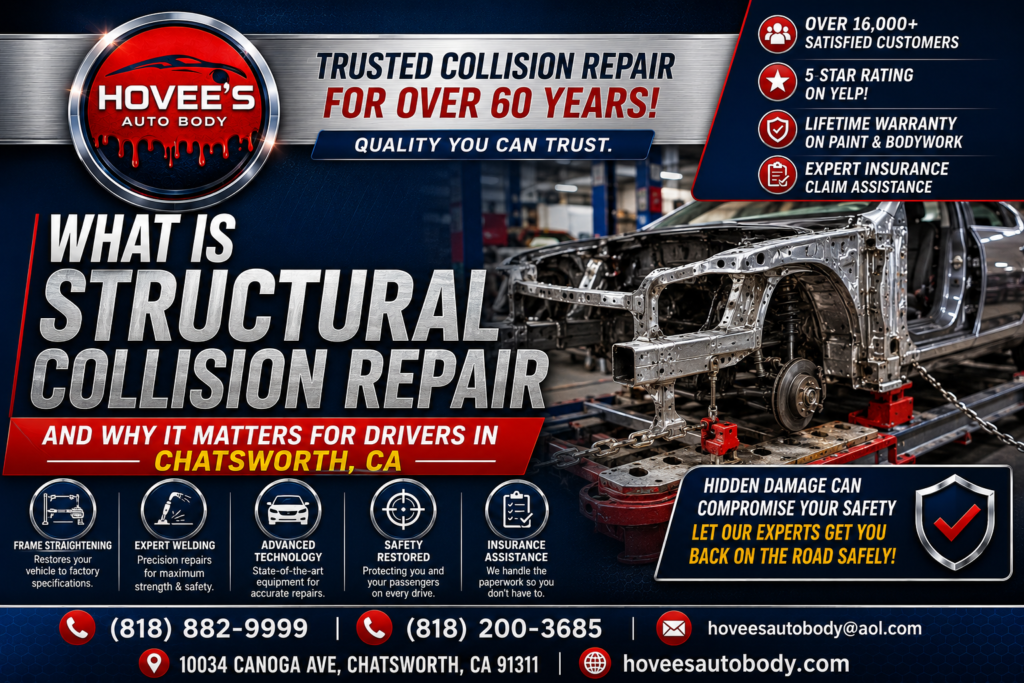
Not all collision damage is visible from the outside. After an accident, many vehicles suffer hidden structural damage that can affect safety, drivability, and long-term performance. While dents and scratches may grab attention first, the underlying structure of the vehicle is often the most important part to inspect and repair properly. For drivers searching for structural collision repair in Chatsworth, CA, understanding how structural repairs work can help protect both your vehicle and your safety after an accident. Modern vehicles are engineered with advanced safety systems and highly specialized structural designs. Even relatively minor accidents in Chatsworth, Woodland Hills, Northridge, Porter Ranch, Canoga Park, Reseda, or West Hills can compromise structural integrity underneath the surface. Quick Answer: What Is Structural Collision Repair? Structural collision repair restores the frame or structural components of a vehicle after an accident. This process may include frame straightening, unibody repair, welding, panel replacement, suspension alignment, and recalibration of vehicle safety systems. Proper structural repair helps restore the vehicle to manufacturer safety specifications. At Hovee’s Auto Body & Paint, drivers throughout the San Fernando Valley trust experienced technicians for professional structural collision repair using modern repair equipment and manufacturer-approved repair procedures. Since 1962, Hovee’s Auto Body & Paint has proudly served Southern California communities with trusted collision repair services focused on quality workmanship, safety, and customer satisfaction. Why Structural Damage Is More Serious Than Cosmetic Damage Many drivers focus on visible dents, scratches, or bumper damage after an accident. However, structural damage can create far greater long-term risks. The structure of your vehicle is designed to: Protect passengers during collisions Absorb crash energy properly Maintain vehicle stability Support suspension and steering systems Keep safety systems aligned If the structural integrity is compromised and not repaired correctly, future accidents may become significantly more dangerous. Improper repairs can also affect: Steering performance Wheel alignment Suspension geometry Airbag deployment timing Crash protection Tire wear Vehicle handling What Causes Structural Damage? Structural damage may occur during many types of accidents, including: Front-end collisions Rear-end impacts Side-impact accidents Freeway accidents Parking lot collisions Vehicle rollovers High-speed impacts Southern California traffic conditions increase the likelihood of collision-related structural damage, especially along busy routes throughout Chatsworth, Woodland Hills, Northridge, and the greater San Fernando Valley. Modern Vehicles Use Unibody Construction Most modern vehicles use what is known as unibody construction. Unlike older body-on-frame vehicles, unibody vehicles combine the body and structural frame into one integrated system. This design improves: Fuel efficiency Crash safety Vehicle weight distribution Handling performance However, unibody construction also means structural damage can spread across multiple areas during a collision. Even smaller impacts may affect: Frame rails Pillars Aprons Floor pans Crossmembers Roof supports Professional inspections help determine the true extent of damage after an accident. Signs Your Vehicle May Need Structural Collision Repair Structural damage is not always visible immediately after an accident. Common warning signs include: Vehicle Pulling While Driving If the car drifts left or right after a collision, structural misalignment may exist. Uneven Body Panel Gaps Misaligned doors, fenders, hoods, or trunks often indicate hidden structural movement. Steering Wheel Off-Center Changes in steering feel or positioning may signal underlying frame damage. Uneven Tire Wear Structural issues may affect suspension geometry and alignment angles. Doors Not Closing Properly Difficulty opening or closing doors may indicate structural shifting. Unusual Noises or Vibrations Clunking, rattling, or vibrations after an accident should never be ignored. At Hovee’s Auto Body Repair Services, technicians perform detailed inspections to identify both visible and hidden structural damage. How Structural Collision Repair Works Modern structural repair involves advanced diagnostic and repair equipment designed to restore vehicles precisely. Step 1: Comprehensive Structural Inspection Technicians begin by measuring the vehicle structure using computerized measuring systems. This helps identify: Frame movement Structural twisting Compression damage Alignment inconsistencies Step 2: Vehicle Disassembly Damaged panels and components are removed to access hidden structural areas. This often reveals additional damage not visible during initial estimates. Step 3: Frame Straightening Advanced frame machines apply controlled force to restore structural alignment according to manufacturer specifications. Precision measurements are critical during this process. Step 4: Structural Component Repair or Replacement Damaged structural components may be: Repaired Reinforced Welded Replaced entirely Modern repair procedures follow manufacturer guidelines to maintain crash safety performance. Step 5: Reassembly and Calibration After structural repairs are completed, technicians reinstall components and recalibrate vehicle safety systems. This may include: ADAS calibration Lane departure systems Collision avoidance systems Blind spot monitoring Backup cameras Why Proper Structural Repairs Matter for Future Safety Vehicles are carefully engineered to behave in specific ways during collisions. Crumple zones absorb impact energy while protecting passengers inside the cabin. If structural repairs are incomplete or improperly performed, future crashes may not distribute impact forces correctly. This increases the risk of: Passenger injury Airbag timing issues Loss of structural protection Poor crash performance Professional structural collision repair helps restore the vehicle as closely as possible to factory safety standards. Modern Collision Repair Requires Advanced Technology Today’s vehicles contain far more technology than older cars. Structural repairs often involve: Computerized measuring systems Laser alignment equipment Specialized welding procedures Advanced scanning tools Manufacturer repair databases At Hovee’s Auto Body & Paint, the repair team uses modern collision repair technology designed to deliver accurate and reliable structural repairs. How Structural Damage Affects Vehicle Value Structural damage can significantly impact resale value if repairs are not completed properly. Buyers and dealerships often inspect: Frame history Panel alignment Repair quality Paint consistency Suspension geometry High-quality repairs help protect both safety and long-term vehicle value. Poor repairs, on the other hand, may create: Visible alignment issues Persistent drivability problems Premature tire wear Reduced resale value Ongoing repair expenses Insurance Claims and Structural Collision Repair Structural repairs are often more complex than cosmetic repairs, which may require supplemental insurance approvals. Insurance companies typically evaluate: Repair costs Vehicle value Structural repair feasibility Replacement part requirements At Hovee’s Auto Body & Paint, the team works directly with insurance companies to help streamline approvals and documentation during the
How Insurance Claims Work for Collision Repair in Chatsworth and Woodland Hills, CA
Getting into an accident is stressful enough. Between dealing with vehicle damage, speaking with insurance companies, arranging transportation, and worrying about repair costs, many Southern California drivers quickly become overwhelmed. For drivers searching for collision repair in Chatsworth, CA, understanding how the insurance claim process works can make the experience smoother and far less confusing. Many people assume the insurance company controls the entire repair process. In reality, California drivers have important rights regarding where their vehicle gets repaired and how repairs are handled. Whether your accident happened in Chatsworth, Woodland Hills, Northridge, Porter Ranch, Canoga Park, Reseda, West Hills, or nearby areas, knowing the steps involved in collision repair insurance claims can help you avoid delays, reduce stress, and protect your vehicle’s long-term value. Quick Answer: How Do Insurance Claims Work for Collision Repair? After an accident, drivers typically file a claim with their insurance company, receive a damage estimate, choose a collision repair shop, and coordinate repairs through both the insurance provider and repair facility. Professional collision repair shops often help customers manage insurance paperwork, supplemental estimates, inspections, and repair approvals throughout the process. At Hovee’s Auto Body & Paint, customers throughout the San Fernando Valley rely on experienced technicians and insurance claim assistance to simplify the repair process after an accident. Since 1962, Hovee’s Auto Body & Paint has helped Southern California drivers restore vehicles safely while working directly with insurance providers to help minimize complications and delays. What To Do Immediately After an Accident The moments after an accident are often chaotic. Staying calm and taking the proper steps helps protect your safety and strengthens your insurance claim documentation. Step 1: Check for Injuries Your safety always comes first. Check yourself and passengers for injuries. If anyone is hurt, call emergency services immediately. Step 2: Move to a Safe Location If possible, move vehicles away from traffic to reduce additional risks. Busy Southern California roads and freeways can quickly become dangerous after an accident. Step 3: Contact Law Enforcement if Necessary Police reports may become important for insurance documentation, especially when: There are injuries Major damage occurred Liability is disputed Multiple vehicles are involved Step 4: Exchange Information Gather: Insurance information Driver license details Vehicle registration Contact information Step 5: Document the Accident Scene Take photos of: Vehicle damage License plates Road conditions Traffic signs Intersection layout Visible injuries if appropriate Detailed documentation often helps prevent insurance claim disputes later. Understanding the Different Types of Insurance Coverage Many drivers do not fully understand their coverage until an accident occurs. Several types of insurance coverage may affect collision repairs. Collision Coverage Collision coverage typically helps pay for repairs to your own vehicle after an accident, regardless of fault. Liability Coverage Liability insurance generally covers damage you cause to other vehicles or property. Comprehensive Coverage Comprehensive coverage usually applies to non-collision damage such as: Theft Vandalism Falling objects Weather damage Fire damage Uninsured Motorist Coverage This coverage may help if the at-fault driver lacks insurance. Understanding your policy helps you better navigate repair approvals and potential out-of-pocket costs. You Have the Right To Choose Your Collision Repair Shop One of the biggest misconceptions about insurance claims is that drivers must use the repair shop recommended by the insurance company. In California, drivers generally have the legal right to choose the collision repair facility they trust. Insurance companies may suggest “preferred” repair facilities, but the final decision belongs to the vehicle owner. Choosing an experienced independent repair shop often provides: Better communication Higher-quality repairs More personalized service Greater repair transparency Closer attention to detail At Hovee’s Auto Body & Paint, customers throughout Chatsworth and Woodland Hills receive professional repair guidance and direct insurance claim support throughout the process. How the Insurance Estimate Process Works After filing a claim, the insurance company typically prepares an initial repair estimate. This estimate may involve: Photos submitted digitally In-person inspections Third-party adjusters Repair facility evaluations However, the initial estimate often represents only visible damage. Once repairs begin, technicians frequently discover hidden damage underneath body panels or structural components. What Is a Supplemental Estimate? A supplemental estimate is an updated repair estimate created after additional hidden damage is discovered during the repair process. Supplements are extremely common in collision repair. Examples of hidden damage may include: Frame movement Broken brackets Sensor damage Suspension damage Internal bumper support damage Electrical system issues Professional collision repair facilities communicate directly with insurance companies to document supplemental repairs properly. This helps ensure necessary repairs receive approval before work continues. Why Modern Vehicles Make Insurance Claims More Complex Today’s vehicles contain far more technology than older cars. Modern repairs may involve: Radar systems Backup cameras Blind spot sensors Adaptive cruise control Lane departure systems Airbag modules Computerized calibrations Even seemingly small accidents may require advanced diagnostics and recalibration procedures. Insurance adjusters and repair facilities must account for these systems during the repair process. Rental Car Assistance During Collision Repairs Many drivers worry about transportation while their vehicle is being repaired. Rental coverage depends on your policy, but many insurance plans include temporary rental assistance. Rental availability may depend on: Policy limits Repair timeline Fault determination Rental reimbursement coverage At Hovee’s Auto Body & Paint, the team helps customers coordinate rental assistance whenever possible to minimize disruptions during repairs. How Long Insurance Claim Repairs Usually Take Repair timelines vary depending on several factors. Some repairs may take only a few days, while major structural repairs can require multiple weeks. Factors affecting repair time include: Insurance approvals Supplemental estimates Parts availability Structural damage severity Paint curing times Safety calibrations Many drivers become frustrated with repair delays, but quality repairs require careful attention and proper procedures. Why Cheap Repairs Can Become Expensive Later After an accident, some drivers look for the cheapest repair option available. Unfortunately, low-cost shortcuts often create bigger problems later. Poor collision repairs may result in: Paint mismatches Premature rust Frame misalignment Water leaks Unsafe structural repairs Sensor malfunctions Reduced resale value Proper collision repair helps restore both
The Complete Guide to Collision Repair in Chatsworth, CA: What Southern California Drivers Need to Know
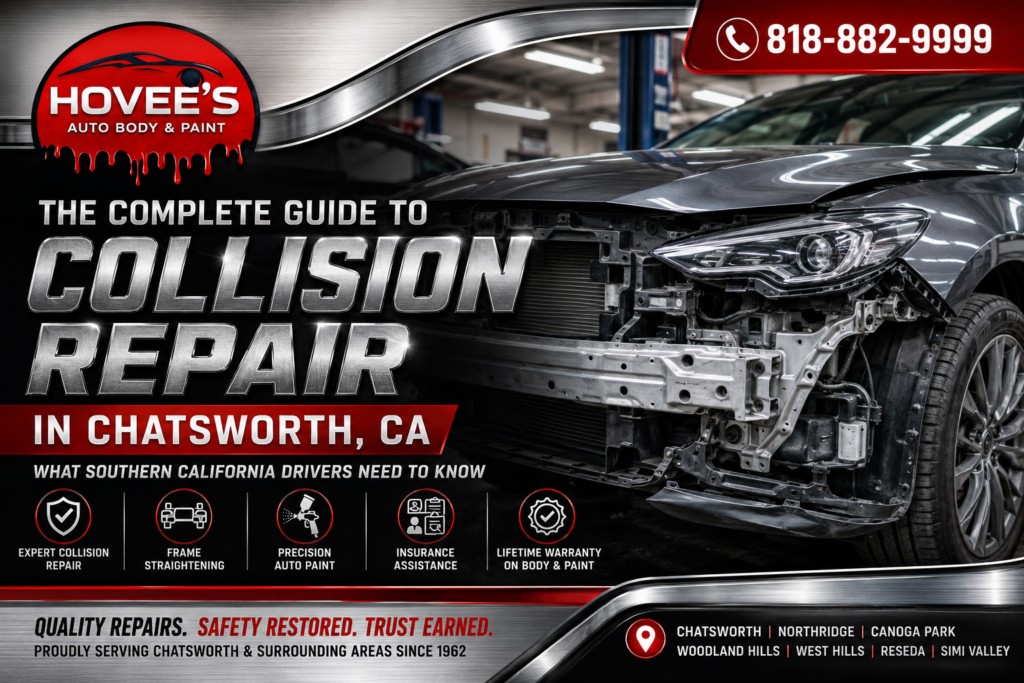
Accidents happen fast. One distracted driver, a sudden stop on the 118 Freeway, or a parking lot mishap in Chatsworth can leave your vehicle damaged and unsafe to drive. For many Southern California drivers, understanding the collision repair process can feel overwhelming — especially when insurance claims, repair estimates, paint matching, and structural damage are involved. If you are searching for professional collision repair in Chatsworth, CA, knowing what to expect can help you make smarter decisions for your vehicle, your safety, and your investment. Modern vehicles are far more advanced than they were even a decade ago. Today’s cars include sensors, cameras, ADAS systems, aluminum panels, and complex structural components that require specialized equipment and experienced technicians. Quick Answer: What Is Collision Repair? Collision repair is the process of restoring a vehicle after an accident or impact damage. This may include frame straightening, body panel replacement, dent removal, bumper repair, auto painting, structural repairs, windshield replacement, and safety system recalibration. Professional collision repair helps restore both the appearance and structural integrity of your vehicle. For collision repair in Chatsworth, CA, drivers throughout Chatsworth, Northridge, Porter Ranch, Canoga Park, Woodland Hills, West Hills, Reseda, and Simi Valley trust Hovee’s Auto Body & Paint for high-quality repairs backed by decades of experience. Since 1962, Hovee’s Auto Body & Paint has built a reputation throughout the San Fernando Valley for quality craftsmanship, honest service, and attention to detail. Their experienced team handles everything from minor cosmetic damage to major structural collision repairs. Why Collision Repair Matters After an Accident Many drivers focus only on visible damage after an accident. A scratched bumper or dented fender might seem minor at first glance, but hidden damage underneath can create serious long-term problems. Modern vehicles are engineered with crumple zones, safety sensors, radar systems, and structural reinforcements designed to absorb impact during a crash. Even low-speed collisions can affect these systems. Professional collision repair helps restore: Vehicle safety systems Structural integrity Proper alignment Paint protection Resale value Driving performance Airbag sensor functionality Advanced driver assistance systems (ADAS) Ignoring collision damage may lead to: Uneven tire wear Steering problems Poor fuel efficiency Water leaks Rust development Unsafe crash protection Electrical problems Common Types of Collision Damage Seen in Chatsworth Southern California traffic conditions create a wide range of accident scenarios. Drivers commuting through Chatsworth, Northridge, Woodland Hills, and the surrounding San Fernando Valley often experience heavy traffic congestion, freeway accidents, parking lot collisions, and distracted driving incidents. Some of the most common collision repair issues include: Front-End Damage Front-end collisions are among the most common accidents in Southern California. Damage may involve: Bumpers Grilles Radiators Headlights Hoods Frame rails Sensors and cameras Rear-End Collision Damage Rear-end accidents can damage: Rear bumpers Trunk panels Backup cameras Parking sensors Frame supports Side Impact Damage T-bone accidents often create extensive structural damage affecting: Doors Quarter panels Pillars Suspension systems Side airbags Paint Damage and Scratches Even smaller accidents may require professional paint correction and refinishing to protect the vehicle from corrosion and preserve appearance. The Collision Repair Process Explained Many customers are surprised by how detailed modern collision repair has become. Repairing a vehicle today involves advanced diagnostics, precise measurements, and manufacturer repair procedures. 1. Initial Inspection and Damage Assessment The process begins with a full inspection of the vehicle. Technicians evaluate visible and hidden damage to determine the proper repair plan. This includes: Frame measurements Structural inspections Safety system scans Paint damage analysis Suspension checks 2. Insurance Estimate Coordination Many drivers feel stressed when dealing with insurance companies after an accident. A quality collision repair shop helps simplify the process. At Hovee’s Auto Body & Paint, the team works directly with insurance providers to help streamline approvals, supplemental estimates, and repair documentation. 3. Disassembly and Hidden Damage Inspection Once repairs begin, technicians may uncover hidden structural or mechanical damage underneath panels and components. This step is critical because visible damage often represents only part of the actual impact. 4. Structural and Frame Repair Modern frame machines and computerized measuring systems help restore the vehicle to manufacturer specifications. Proper frame alignment affects: Crash safety Steering Suspension geometry Tire wear Vehicle stability 5. Body Panel Repair and Replacement Damaged body panels may be repaired or replaced depending on severity. Skilled technicians reshape metal panels, repair dents, and restore proper fitment. 6. Auto Paint and Refinishing Professional paint matching is essential for seamless results. Advanced paint systems help match factory colors precisely. At Hovee’s Auto Body & Paint, high-quality refinishing materials and modern spray booth technology help ensure durable, factory-quality finishes. 7. Reassembly and Calibration Modern vehicles contain advanced safety systems requiring recalibration after repairs. This may include: Lane departure systems Adaptive cruise control Blind spot monitoring Collision avoidance sensors Backup cameras 8. Final Quality Inspection Before delivery, technicians perform final inspections to verify repair quality, paint finish, alignment, and safety system functionality. How Long Does Collision Repair Take? Repair timelines vary depending on the severity of the damage, insurance approvals, and parts availability. Minor repairs may take only a few days, while extensive structural repairs can require several weeks. Common factors affecting repair time include: Vehicle make and model Parts availability Insurance approval delays Structural damage severity Paint curing times Calibration requirements Quality collision repair takes time because safety and precision matter. Why Choosing the Right Collision Repair Shop Matters Not all body shops deliver the same level of workmanship. Choosing an experienced repair facility can make a major difference in the final result. Drivers throughout Chatsworth and the San Fernando Valley often choose a repair shop based on: Experience Reputation Warranty coverage Equipment quality Insurance assistance Customer reviews Communication Hovee’s Auto Body & Paint has served Southern California drivers for decades with a focus on quality workmanship and customer satisfaction. The shop offers: Over 60 years of industry experience Lifetime warranty on paint and bodywork State-of-the-art repair equipment Insurance claim assistance Transparent communication Experienced technicians Understanding OEM vs Aftermarket Parts After an accident, replacement parts may be required.