What Is Structural Collision Repair and Why It Matters for Southern California Drivers in Chatsworth, CA
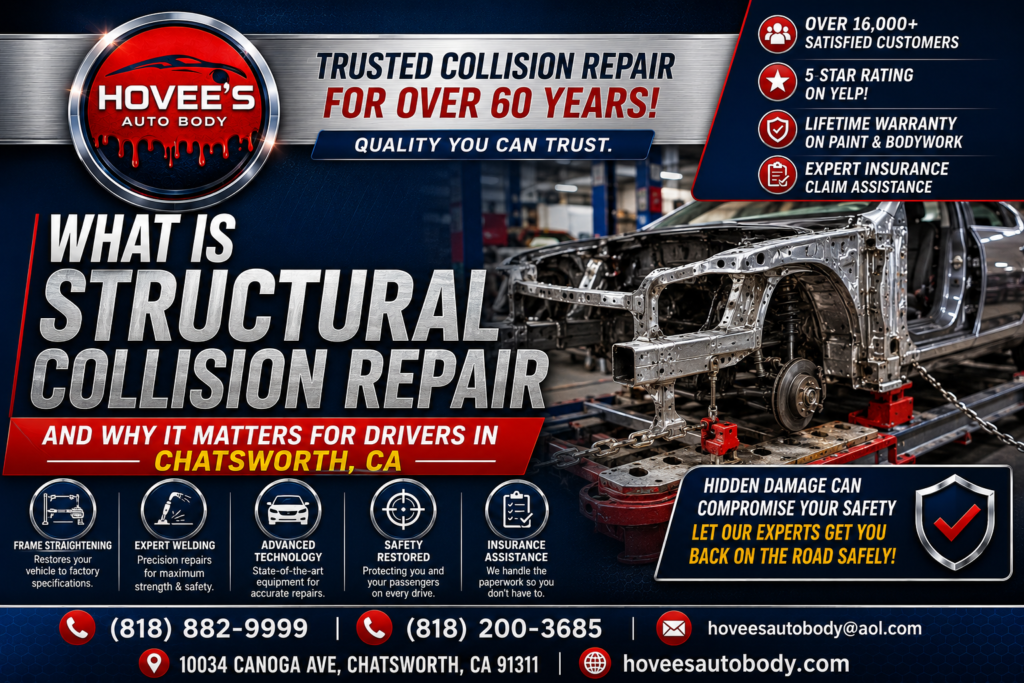
Not all collision damage is visible from the outside. After an accident, many vehicles suffer hidden structural damage that can affect safety, drivability, and long-term performance. While dents and scratches may grab attention first, the underlying structure of the vehicle is often the most important part to inspect and repair properly. For drivers searching for structural collision repair in Chatsworth, CA, understanding how structural repairs work can help protect both your vehicle and your safety after an accident. Modern vehicles are engineered with advanced safety systems and highly specialized structural designs. Even relatively minor accidents in Chatsworth, Woodland Hills, Northridge, Porter Ranch, Canoga Park, Reseda, or West Hills can compromise structural integrity underneath the surface. Quick Answer: What Is Structural Collision Repair? Structural collision repair restores the frame or structural components of a vehicle after an accident. This process may include frame straightening, unibody repair, welding, panel replacement, suspension alignment, and recalibration of vehicle safety systems. Proper structural repair helps restore the vehicle to manufacturer safety specifications. At Hovee’s Auto Body & Paint, drivers throughout the San Fernando Valley trust experienced technicians for professional structural collision repair using modern repair equipment and manufacturer-approved repair procedures. Since 1962, Hovee’s Auto Body & Paint has proudly served Southern California communities with trusted collision repair services focused on quality workmanship, safety, and customer satisfaction. Why Structural Damage Is More Serious Than Cosmetic Damage Many drivers focus on visible dents, scratches, or bumper damage after an accident. However, structural damage can create far greater long-term risks. The structure of your vehicle is designed to: Protect passengers during collisions Absorb crash energy properly Maintain vehicle stability Support suspension and steering systems Keep safety systems aligned If the structural integrity is compromised and not repaired correctly, future accidents may become significantly more dangerous. Improper repairs can also affect: Steering performance Wheel alignment Suspension geometry Airbag deployment timing Crash protection Tire wear Vehicle handling What Causes Structural Damage? Structural damage may occur during many types of accidents, including: Front-end collisions Rear-end impacts Side-impact accidents Freeway accidents Parking lot collisions Vehicle rollovers High-speed impacts Southern California traffic conditions increase the likelihood of collision-related structural damage, especially along busy routes throughout Chatsworth, Woodland Hills, Northridge, and the greater San Fernando Valley. Modern Vehicles Use Unibody Construction Most modern vehicles use what is known as unibody construction. Unlike older body-on-frame vehicles, unibody vehicles combine the body and structural frame into one integrated system. This design improves: Fuel efficiency Crash safety Vehicle weight distribution Handling performance However, unibody construction also means structural damage can spread across multiple areas during a collision. Even smaller impacts may affect: Frame rails Pillars Aprons Floor pans Crossmembers Roof supports Professional inspections help determine the true extent of damage after an accident. Signs Your Vehicle May Need Structural Collision Repair Structural damage is not always visible immediately after an accident. Common warning signs include: Vehicle Pulling While Driving If the car drifts left or right after a collision, structural misalignment may exist. Uneven Body Panel Gaps Misaligned doors, fenders, hoods, or trunks often indicate hidden structural movement. Steering Wheel Off-Center Changes in steering feel or positioning may signal underlying frame damage. Uneven Tire Wear Structural issues may affect suspension geometry and alignment angles. Doors Not Closing Properly Difficulty opening or closing doors may indicate structural shifting. Unusual Noises or Vibrations Clunking, rattling, or vibrations after an accident should never be ignored. At Hovee’s Auto Body Repair Services, technicians perform detailed inspections to identify both visible and hidden structural damage. How Structural Collision Repair Works Modern structural repair involves advanced diagnostic and repair equipment designed to restore vehicles precisely. Step 1: Comprehensive Structural Inspection Technicians begin by measuring the vehicle structure using computerized measuring systems. This helps identify: Frame movement Structural twisting Compression damage Alignment inconsistencies Step 2: Vehicle Disassembly Damaged panels and components are removed to access hidden structural areas. This often reveals additional damage not visible during initial estimates. Step 3: Frame Straightening Advanced frame machines apply controlled force to restore structural alignment according to manufacturer specifications. Precision measurements are critical during this process. Step 4: Structural Component Repair or Replacement Damaged structural components may be: Repaired Reinforced Welded Replaced entirely Modern repair procedures follow manufacturer guidelines to maintain crash safety performance. Step 5: Reassembly and Calibration After structural repairs are completed, technicians reinstall components and recalibrate vehicle safety systems. This may include: ADAS calibration Lane departure systems Collision avoidance systems Blind spot monitoring Backup cameras Why Proper Structural Repairs Matter for Future Safety Vehicles are carefully engineered to behave in specific ways during collisions. Crumple zones absorb impact energy while protecting passengers inside the cabin. If structural repairs are incomplete or improperly performed, future crashes may not distribute impact forces correctly. This increases the risk of: Passenger injury Airbag timing issues Loss of structural protection Poor crash performance Professional structural collision repair helps restore the vehicle as closely as possible to factory safety standards. Modern Collision Repair Requires Advanced Technology Today’s vehicles contain far more technology than older cars. Structural repairs often involve: Computerized measuring systems Laser alignment equipment Specialized welding procedures Advanced scanning tools Manufacturer repair databases At Hovee’s Auto Body & Paint, the repair team uses modern collision repair technology designed to deliver accurate and reliable structural repairs. How Structural Damage Affects Vehicle Value Structural damage can significantly impact resale value if repairs are not completed properly. Buyers and dealerships often inspect: Frame history Panel alignment Repair quality Paint consistency Suspension geometry High-quality repairs help protect both safety and long-term vehicle value. Poor repairs, on the other hand, may create: Visible alignment issues Persistent drivability problems Premature tire wear Reduced resale value Ongoing repair expenses Insurance Claims and Structural Collision Repair Structural repairs are often more complex than cosmetic repairs, which may require supplemental insurance approvals. Insurance companies typically evaluate: Repair costs Vehicle value Structural repair feasibility Replacement part requirements At Hovee’s Auto Body & Paint, the team works directly with insurance companies to help streamline approvals and documentation during the